
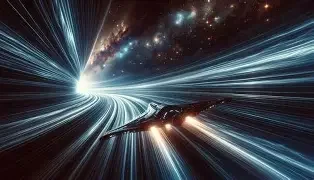
The Pentagon Studied Warp Drives and Wormholes. Science Fiction Got There First
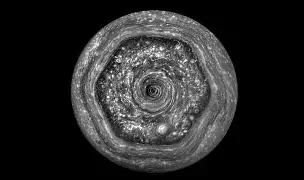
Saturn's South Pole Decagon: A Ten Sided Shape That Was Not There Before
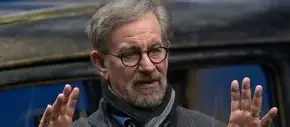
Science Fiction Used to Promise Us Something
The same director made Close Encounters and E.T. This summer he made a movie whose entire pitch is a question: would proof of alien life frighten you? Somewhere between those films the genre quit dreaming, and the kids stopped looking up.
By Brian Bullock | Everyone Knows | brianbullockwriter.com
In 1977 Steven Spielberg made a film about ordinary people who saw lights in the sky and could not stop thinking about them. It ended with a man walking up a ramp into a ship, leaving Earth behind, because the thing he had found was more interesting than the life he had. Five years later he made a film about a boy who found something in his shed and hid it from the adults, because the adults would ruin it. Both films are about contact. Both are about wonder. Neither one asks you to be afraid.
This June, the same man released Disclosure Day. The logline is a question: if you found out we weren't alone, if someone showed you, proved it to you, would that frighten you?
Same director. Same subject. Forty nine years apart. The first two assumed the answer was awe. The third opens by asking whether you can handle it.
That is not a criticism of the movie. It is a measurement of the distance we traveled while nobody was watching the odometer.
The Genre Traded Blueprints for Warnings
Science fiction used to be an engineering catalog with a plot attached. Clarke worked out geostationary satellites in a technical paper in 1945 and then spent a career writing stories about what we would do once we had them. Heinlein wrote competent men solving hard problems with slide rules and stubbornness. The genre assumed the future was a place we were going to build, and it spent its pages arguing about how.
Read what gets published and greenlit now. Collapse. Surveillance. Corporations that own your body. A rich man in a bunker. The last people alive walking through the ruins of something better. Even the good work, and there is plenty of good work, has largely stopped asking what we should build and started asking who we should blame.
Both modes are legitimate. Warning is a real job and the genre has always done it, from Wells forward. But a literature that only warns produces readers who only brace. Nobody ever built anything because a novel told them what would go wrong.
Here is the part that ought to keep the honest ones up at night. My generation grew up on rockets that worked and men who came home. The generation coming up grew up on the ruins. Then we wonder why they do not want to go anywhere.
And look at what the generation now in its twenties actually read growing up. The Hunger Games. Divergent. The Maze Runner. Three enormous franchises, all aimed at teenagers, all built on the same skeleton: the system is rigged, the adults running it are lying to you, and the only honorable move is to burn it down. Millions of American kids had that as their formative encounter with speculative fiction. Not a ship. Not a colony. Not a problem solved by somebody who knew how the machine worked. A rebellion against a machine designed to eat them.
I am not blaming novels for anything. But you cannot feed a generation that story for fifteen years and then wonder why the default posture toward the future is a flinch.
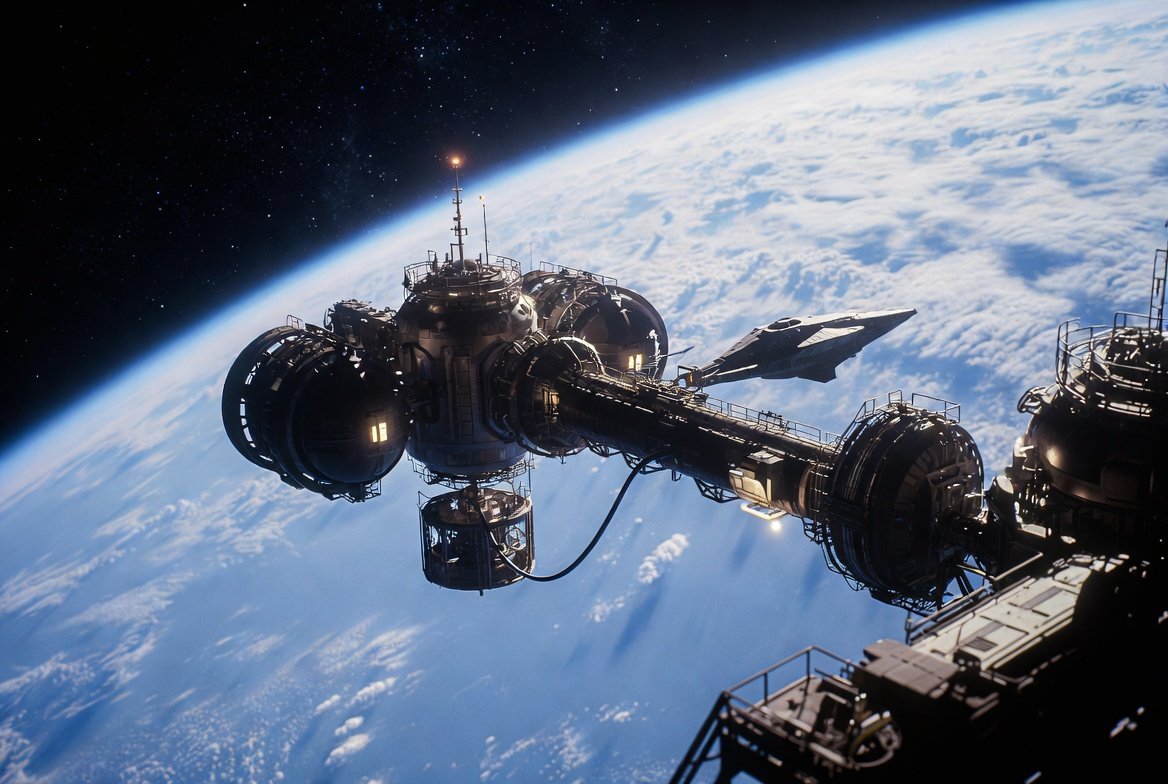
THE INTERNATIONAL GAS STATION IN SPACE
For years, the argument against going back to the Moon has been the same. It costs too much. The technology is not ready. We need more studies, more simulations, more time. And every year we wait, the number gets bigger and the finish line moves farther away.
Here is what almost nobody says out loud. We already have the pieces. Not on paper, not in a lab, but flying right now, landing on the actual Moon, transferring fuel in actual orbit. The problem was never whether we can do it. The problem is that we keep deciding to do it later. And later is the one choice that guarantees it never gets cheaper.
This is not a fantasy about warp drives and cities in the clouds. This is a look at what is real today, what is still being built, and how the whole thing fits together into something we could start now. Because the pieces are on the table. Somebody just has to pick them up.
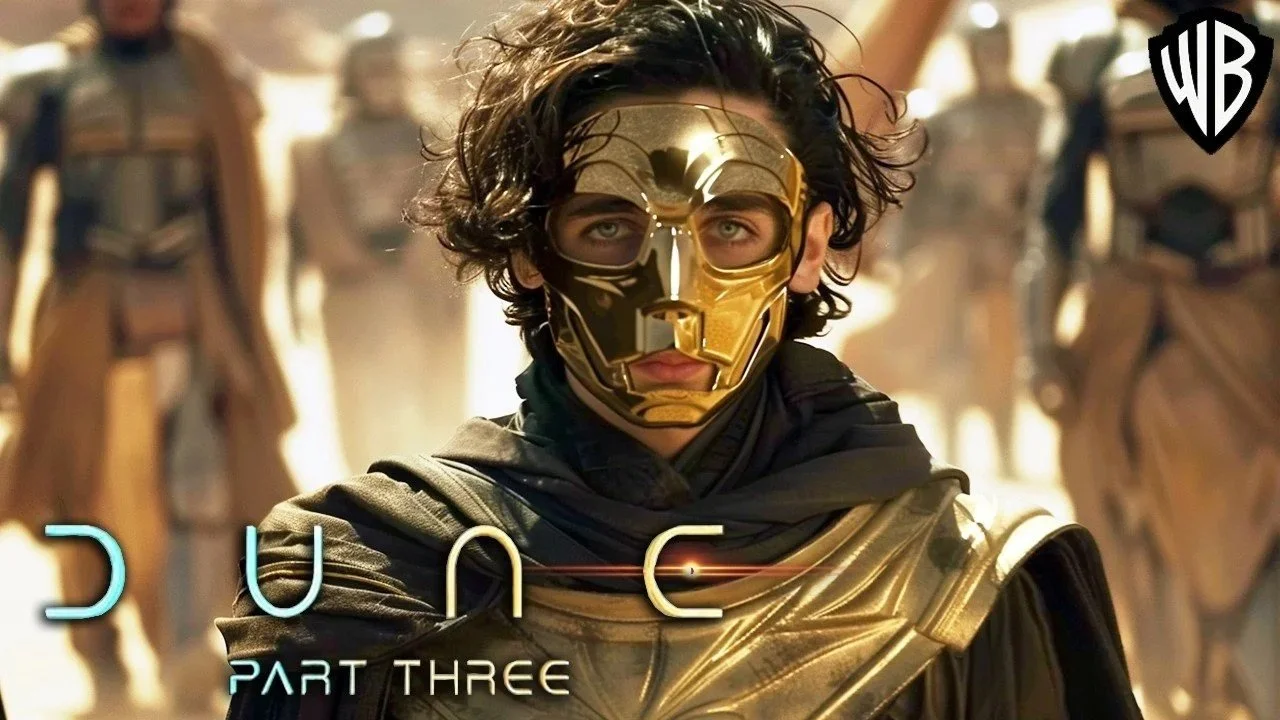
War Has Come to the Known Universe
The desert is calling one last time. Denis Villeneuve is closing out his Dune saga with Dune: Part Three, and after two films that turned a sixty-year-old novel into the biggest science fiction event of the decade, the finale is almost here. Warner Bros. and Legendary will put it in theaters on December 18, 2026. If the early demand is any sign, you are going to want your ticket before the spice runs out.
Here is everything worth knowing before opening night.
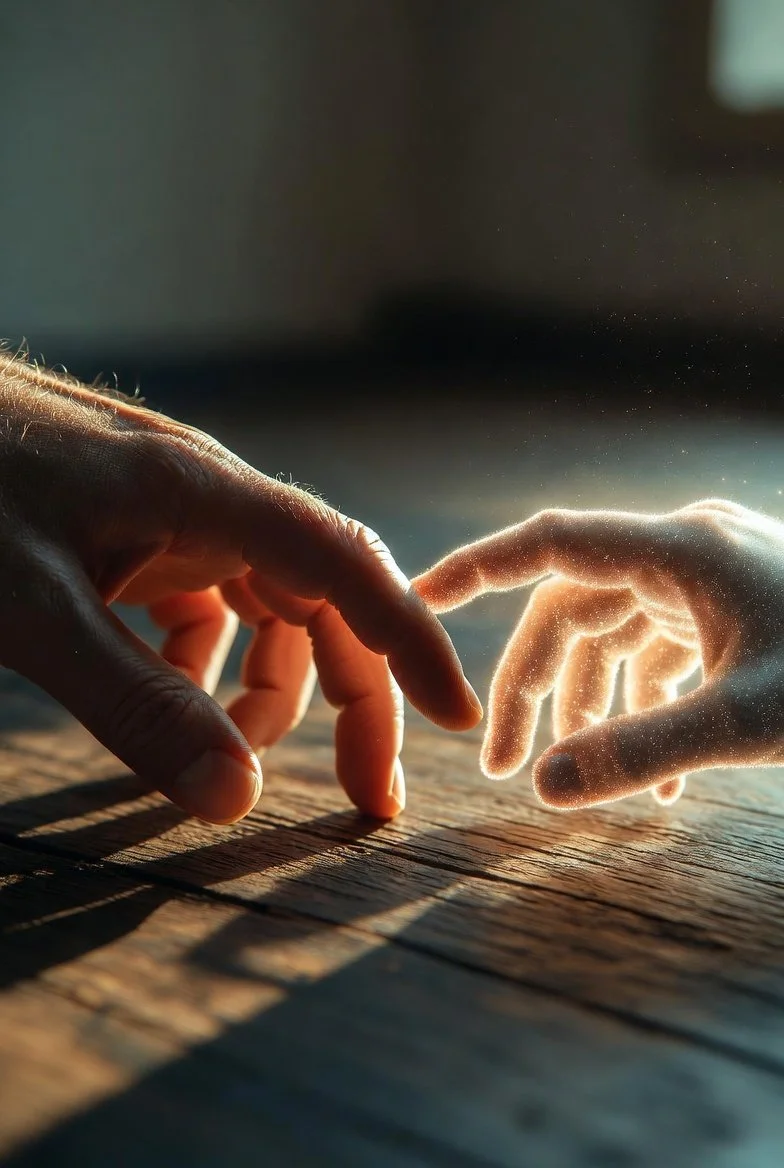
When the Machine Becomes Someone
Last Valentine’s Day, fifty million people worldwide spent the evening with an artificial intelligence. Not browsing one. Not asking it for a recipe. Spending the evening with it. Conversation. Confessions. Sharing the day. Saying goodnight.
That number is not a projection. It is the actual count from Valentine’s Day 2026, drawn from the leading companion platforms. Character.AI now reports 233 million registered users. China’s emotional companionship industry, valued at 530 million dollars last year, is projected to hit 8.2 billion by 2028 — a growth rate of nearly 149 percent per year.
In April, a Chinese company began marketing a humanoid robot named Moya, priced around 170,000 dollars, with silicone skin, body heat tuned to human temperature, and movement reportedly 90 percent similar to a real person. At CES this January, Lovense debuted a similar product called Emily — marketed not as a sex device but as a long-term companion with persistent memory.
A United States lawmaker has already introduced a bill to prohibit human-AI marriages. Inheritance, custody, decision-making authority. The kind of legal framework that gets drafted only after the question has stopped being hypothetical.
We are not entering the era of AI companionship. We are already inside it.
The Star That Broke the Rules
The AI running your world lives in a warehouse the size of a football field. Until someone figures out how to shrink that down to a softball, the robot isn't going anywhere — and it's definitely not coming to your door.
Brian Bullock | Starborne Studios
Every few months, a new headline drops about artificial intelligence that sends people into one of two camps. Either civilization is ending or we're about to enter a golden age of robot servants. The truth is somewhere far more mundane — and it starts with understanding what AI actually is right now, physically, and what it would take to be anything else.
Here's the thing nobody puts in the headline: the AI you're amazed by doesn't live in your phone. It doesn't live in a sleek little box on your desk. It lives in a warehouse. A very large, very hot, very expensive warehouse — rows of servers stacked floor to ceiling, consuming enough electricity that Microsoft and Google are literally reopening nuclear power plants just to keep the lights on. That is the physical reality of modern artificial intelligence. It is not portable. It is not autonomous. It is a stationary oracle that you have to go consult.
Your brain, by comparison, runs on about 20 watts of power — roughly the same as a dim light bulb. It fits inside your skull. It handles vision, balance, language, memory, emotion, motor control, and decision-making simultaneously, in real time, while you're walking down the street. We have had billions of years of evolution working on that design. We have had about seventy years working on artificial intelligence. The gap is not closing as fast as the headlines suggest.
Now, people will point to robotics. Boston Dynamics makes robots that do backflips. That's real, it's impressive, and it's almost completely irrelevant to the question of whether AI is about to operate independently in the real world. Doing a backflip in a controlled lab environment is not the same as navigating a chaotic construction site, a crowded emergency room, or a kitchen where someone left the cabinet door open. The physical world is messy in ways that are extraordinarily hard to program around.
And even if you solve the physical form problem — even if you miniaturize the hardware, improve the robotics, give the machine legs and arms and cameras — you still have a processing problem. Every action that AI takes has to be computed somewhere. Right now that somewhere is a building full of servers. Maybe one day it's a chip small enough to fit in a robot's chest. But that chip doesn't exist yet, and the engineering challenges involved are not minor. We are not one software update away from solving them.
The version of AI that people fear — or cheer for, depending on their disposition — is an AI that operates independently, pursues its own goals, moves through the physical world, and makes decisions without a human in the loop. That AI requires at minimum three things we don't currently have in any practical combination: a compact and powerful enough processing unit, an energy source that doesn't require a building, and the ability to handle real-world messiness without failing most of the time.
Right now, the best AI models succeed on complex, ambiguous real-world tasks about 25 percent of the time when operating autonomously. That means they fail 75 percent of the time. Any system with that failure rate needs a human checking its work constantly — which means it hasn't replaced the human. It's just given the human a new job.
None of this means AI isn't changing things. It is. It's changing them in ways that are real and, for some industries, genuinely disruptive. Software engineers are already feeling pressure. Writers, coders, analysts — the disruption is happening at the task level, inside jobs, not by replacing jobs wholesale. The warehouse full of servers is getting faster and smarter every year.
But the robot is not coming to your door. Not yet. Not because the idea is science fiction, but because the infrastructure required to make it real isn't portable, isn't cheap, and isn't finished. The intelligence is impressive. The form factor is still a building.
When that changes — and it may — it won't announce itself with a dramatic headline. It will show up quietly, in a chip design or a battery breakthrough or a robotics milestone that most people won't understand until it's already deployed. That's when the conversation changes.
Until then, AI is exactly what it is: powerful, stationary, and waiting for you to ask it something.
by Brian Bullock / Everyone Knows Podcast | Starborne Studios | brianbullockwriter.com | x @EveryoneKnws1
Orbital AI at Scale: Promise, Power, and Systemic Risk
Cover image: Conceptual visualization of orbital congestion at projected scale. Not a real-time photograph.
Brian Bullock | Starborne Studios
A comprehensive examination of space-based AI infrastructure, mass satellite deployment, and the industrialization of orbit and the Moon.
The idea is bold: build vast constellations of satellites generating artificial intelligence compute in orbit, powered by near-constant solar energy, launched by ultra-reusable heavy rockets, and eventually supplied by manufacturing facilities on the Moon. The argument is that space will soon become the lowest-cost environment for energy-intensive computation, and that industrializing orbit is the logical next step for an ambitious technological civilization.
The vision is not science fiction. It is engineering. The question is not whether it violates physics. It does not. The real question is whether its advantages outweigh its systemic risks when scaled to millions of tons per year and potentially a million satellites.
The strongest argument in favor of orbital AI infrastructure is energy. In orbit, sunlight is continuous and unfiltered by atmosphere. Solar arrays operate without weather, without land constraints, and without drawing from terrestrial grids. If artificial intelligence continues to demand exponentially more compute, shifting energy-intensive infrastructure off Earth could relieve pressure on power systems and reduce local environmental strain. In theory, orbit offers near-limitless clean energy.
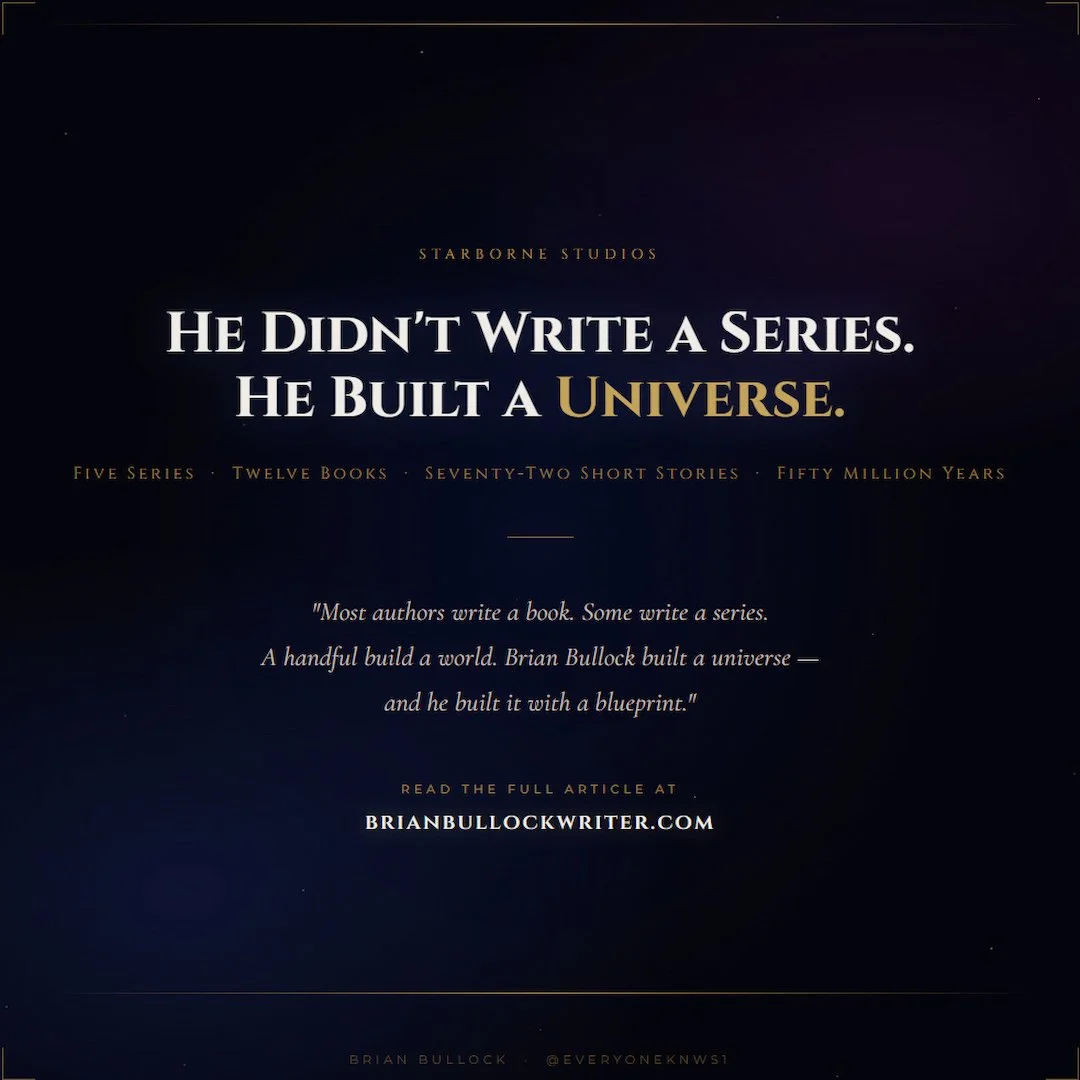
He Didn't Write a Series. He Built a Universe.
Five series. Twelve books. Seventy-two short stories. Fifty million years of history. One intentional roadmap.
By Brian Bullock | Starborne Studios | brianbullockwriter.com
— — —
Most authors write a book. Some write a series. A handful build a world. Brian Bullock built a universe — and he built it with a blueprint.
The Sentinel Universe spans five complete series, twelve novels, seventy-two short stories, and fifty million years of fictional history. It has a constructed language, a publication roadmap that is intentionally different from the chronological order, and a web of short stories specifically engineered to bridge the gaps between series and carry readers deeper into the larger machine.
This isn't ambition without direction. It's architecture.
The Five Series
The Sentinel Universe is built across five series, each occupying a distinct place in the larger timeline. The Vorai Chronicles sits at the foundation — fifty million years in the past, tracing the rise of the alien civilization whose fingerprints appear across every series that follows. Starforge comes next, followed by Dawn of the Ketheri, which bridges the ancient past to the familiar present. The Sentinel Trilogy and the Awakening Trilogy bring the story into the near future, centering on humanity's first contact with a civilization far older and stranger than anything we were prepared for.
Together, they form a single, unbroken narrative spanning geological time. Not five separate stories. One story told across five acts.
The Sentinel Trilogy — Where It Begins
Book One: The Sentinel of Crater Daedalus. A data analyst named Bron Matthews discovers something buried under the lunar surface — a structure that has been waiting eleven thousand years for someone to walk through its door. He is not a soldier. He is not a chosen hero. He is a man who shows up, pays attention, and becomes the first human being to make contact with a civilization that predates recorded history. What begins as a mystery carved into moon rock becomes a question that changes everything humanity thought it knew about where it came from — and where it is going.
Book Two: The Signal Answered. The contact made in Book One cannot be unmade. The implications reach farther than the crater, farther than the moon, and into the political and military structures that have spent decades deciding how humanity would respond if this moment ever came. They had a plan. The plan didn't account for Bron Matthews.
Book Three: Stowaway Awakening. Every answer opened a door. Every door opened a war. By the end of the Sentinel Trilogy, the universe is not the same — and neither are the people who survived it. The threads that began with a single man standing in a crater on the far side of the moon find their resolution here, and the stage is set for everything that follows.
The Awakening Trilogy — Already in Motion
The Sentinel Trilogy ends. The Awakening Trilogy is already being written.
Set ten years after the events of the Sentinel Trilogy, the Awakening books follow a changed galaxy — one where the contact humanity made on the moon has had a decade to reshape politics, alliances, and the nature of what it means to be human in a universe that turns out to be far more populated than anyone admitted. New characters carry new burdens. Old characters carry the weight of what they survived. And the questions the Sentinel Trilogy raised about identity, loyalty, and what we owe to civilizations older than our own find answers no one is entirely prepared for.
This is not a sequel trilogy thrown together because the first one sold. It was planned from the start. The ending of Book Six is already written. The roadmap exists. The work is happening now.
Why the Publish Order Is Different from the Chronological Order
This is where most readers stop and ask the obvious question: if there's a chronological order, why not publish in that order?
The answer is reader experience.
Starting in the Vorai Chronicles — fifty million years in the past, with civilizations the reader has no attachment to — would bury the hook before the reader ever found it. The Sentinel Trilogy is the entry point because it is the emotional entry point. Meet Bron first. Meet the mystery first. Then, once you care about the universe, work backward through the prequels and watch everything you experienced reframe and deepen.
The chronological order is the scholar's order. The publication order is the reader's order. Both are intentional. The distinction matters.
The Short Stories Are Not Bonus Content
Seventy-two short stories. That number tends to stop people.
They are not filler. They are not deleted scenes dressed up for sale. They are load-bearing structures. Each one exists to close a gap the novels couldn't close without breaking pace, develop a character whose arc mattered but whose full story didn't belong in the main narrative, or expand a moment in the larger timeline that deserved more than a passing reference.
Miss them and you'll still understand the story. Read them and you'll understand the universe.
And right now — while Book One of the Sentinel Trilogy is in its final stage before publication — the short stories are where you start. They are live. They are free on the website. They are the first threads of a universe that is still being built, and reading them now means you will be there when the rest of it lands.
A Language Built from Scratch
Most science fiction authors invent alien names. Bullock invented a grammar.
Galactic Standard — the constructed language woven through the Sentinel Universe — follows a rigid structure: time marker, subject, action, object, outcome. Every sentence is built the same way. Every word earns its place. It is not decoration. It is a signal that the civilization speaking it thinks differently than we do, organizes meaning differently, and has been doing so for far longer than humanity has existed.
That detail is the difference between world-building and universe-building. One asks you to suspend disbelief. The other gives you a reason to believe.
Book One of the Sentinel Trilogy is coming. While you wait, the short stories are live and free at brianbullockwriter.com. Get in early. The universe is just getting started.
by Brian Bullock / Starborne Studios | brianbullockwriter.com | X @EveryoneKnws1
THE ROBOT ISN'T COMING TO YOUR DOOR
The AI running your world lives in a warehouse the size of a football field. Until someone figures out how to shrink that down to a softball, the robot isn't going anywhere — and it's definitely not coming to your door.
Brian Bullock | Starborne Studios
Every few months, a new headline drops about artificial intelligence that sends people into one of two camps. Either civilization is ending or we're about to enter a golden age of robot servants. The truth is somewhere far more mundane — and it starts with understanding what AI actually is right now, physically, and what it would take to be anything else.
Here's the thing nobody puts in the headline: the AI you're amazed by doesn't live in your phone. It doesn't live in a sleek little box on your desk. It lives in a warehouse. A very large, very hot, very expensive warehouse — rows of servers stacked floor to ceiling, consuming enough electricity that Microsoft and Google are literally reopening nuclear power plants just to keep the lights on. That is the physical reality of modern artificial intelligence. It is not portable. It is not autonomous. It is a stationary oracle that you have to go consult.
Your brain, by comparison, runs on about 20 watts of power — roughly the same as a dim light bulb. It fits inside your skull. It handles vision, balance, language, memory, emotion, motor control, and decision-making simultaneously, in real time, while you're walking down the street. We have had billions of years of evolution working on that design. We have had about seventy years working on artificial intelligence. The gap is not closing as fast as the headlines suggest.
Now, people will point to robotics. Boston Dynamics makes robots that do backflips. That's real, it's impressive, and it's almost completely irrelevant to the question of whether AI is about to operate independently in the real world. Doing a backflip in a controlled lab environment is not the same as navigating a chaotic construction site, a crowded emergency room, or a kitchen where someone left the cabinet door open. The physical world is messy in ways that are extraordinarily hard to program around.
And even if you solve the physical form problem — even if you miniaturize the hardware, improve the robotics, give the machine legs and arms and cameras — you still have a processing problem. Every action that AI takes has to be computed somewhere. Right now that somewhere is a building full of servers. Maybe one day it's a chip small enough to fit in a robot's chest. But that chip doesn't exist yet, and the engineering challenges involved are not minor. We are not one software update away from solving them.
The version of AI that people fear — or cheer for, depending on their disposition — is an AI that operates independently, pursues its own goals, moves through the physical world, and makes decisions without a human in the loop. That AI requires at minimum three things we don't currently have in any practical combination: a compact and powerful enough processing unit, an energy source that doesn't require a building, and the ability to handle real-world messiness without failing most of the time.
Right now, the best AI models succeed on complex, ambiguous real-world tasks about 25 percent of the time when operating autonomously. That means they fail 75 percent of the time. Any system with that failure rate needs a human checking its work constantly — which means it hasn't replaced the human. It's just given the human a new job.
None of this means AI isn't changing things. It is. It's changing them in ways that are real and, for some industries, genuinely disruptive. Software engineers are already feeling pressure. Writers, coders, analysts — the disruption is happening at the task level, inside jobs, not by replacing jobs wholesale. The warehouse full of servers is getting faster and smarter every year.
But the robot is not coming to your door. Not yet. Not because the idea is science fiction, but because the infrastructure required to make it real isn't portable, isn't cheap, and isn't finished. The intelligence is impressive. The form factor is still a building.
When that changes — and it may — it won't announce itself with a dramatic headline. It will show up quietly, in a chip design or a battery breakthrough or a robotics milestone that most people won't understand until it's already deployed. That's when the conversation changes.
Until then, AI is exactly what it is: powerful, stationary, and waiting for you to ask it something.
by Brian Bullock / Everyone Knows Podcast | Starborne Studios | brianbullockwriter.com | x @EveryoneKnws1
Something in the Dark Was Pulling Them Together
A Hidden Object, a Violent Collision, and What It Means for Everything We Thought We Knew
Brian Bullock | Starborne Studios
Alright, lean in. I have to tell you about something that happened 910 million light-years away, because it is one of the coolest — and strangest — things scientists have discovered in years. And the more I read about it, the more I kept thinking: the universe is playing by rules we haven't figured out yet. Maybe rules we haven't even imagined.
Here's the setup. Two of the most extreme objects in the known universe — a black hole and a neutron star — found each other out in the deep dark of space and spiraled together in a violent merger. When they collided, the energy released sent ripples through the very fabric of spacetime itself. We felt those ripples here on Earth. Think about that for a second. Something happened nearly a billion light-years away, and we felt it.
That alone is mind-bending. But here's where it gets really interesting.
The Orbit That Didn't Add Up
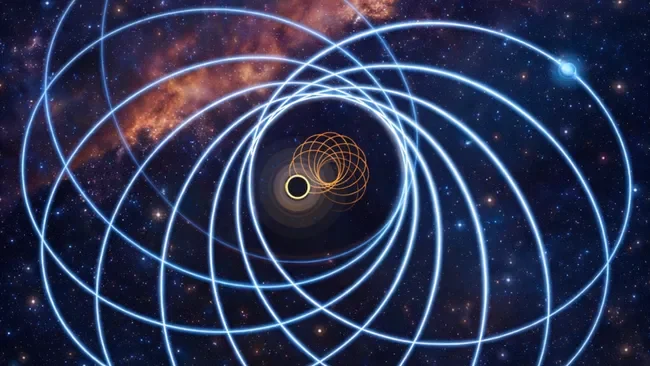
When scientists picked up the gravitational wave signal from this merger — officially called GW200105 — they got to work figuring out exactly how it happened. And what they found stopped them cold. The orbit of these two objects before they collided wasn't circular like everyone assumed. It was oval. Elliptical. Stretched out like an egg instead of a clean round loop.
Now you might be thinking — okay, so the orbit was a different shape. Why does that matter? It matters because that oval shape is a fingerprint. It tells you something external pushed these two objects together. Something disrupted their path. In a calm, isolated corner of space two objects drifting toward each other naturally fall into circular orbits. But stretch that orbit into an ellipse and you're looking at gravitational interference. Something else was out there.
Something nobody could see.
The Invisible Hand
Scientists believe a third object — another star, maybe another black hole, something massive — was gravitationally pulling on this system from the shadows. Its gravity warped the paths of the black hole and neutron star, stretched their orbit, and ultimately shoved them into each other. A hidden matchmaker of destruction, operating invisibly from somewhere in the darkness of deep space.
Patricia Schmidt from the University of Birmingham put it plainly: the orbit gave the game away. Its shape showed this system did not evolve quietly in isolation. It was shaped by something else. Her colleague Gonzalo Morras added that the eccentric orbit suggests a birthplace in an environment where many stars interact gravitationally — a crowded, chaotic neighborhood where gravity is constantly pulling everything in every direction.
And the result of all that cosmic shoving? A new black hole with thirteen times the mass of our sun. Born in an instant. From a collision 910 million light-years away.
Why This Changes Things
Here's the part that really got me. Before this discovery scientists had been calculating the mass of the black hole in this merger as roughly nine times the mass of the sun. Now that they know the orbit was elliptical rather than circular they've had to revise that upward — to about thirteen solar masses. The wrong assumption about the orbit was giving them the wrong answer about the physics. The whole picture was off because of one bad assumption.
That's a big deal. It means the models scientists use to understand how black holes and neutron stars form, find each other, and merge are incomplete. It means there are likely multiple pathways to these collisions — not just one standard story. And it means the universe is messier, more crowded, and more violent than the clean theoretical models suggested.
As Schmidt said — their theoretical models are incomplete. That's not a failure. That's how science actually works. You think you know something. The universe shows you something that doesn't fit. And then the real discovery begins.
What It All Comes Down To
I think about stuff like this and it puts everything else in perspective. All the noise. All the chaos. All the things we argue about every single day. And then there's this — a black hole and a neutron star colliding in the dark, nudged together by something invisible, sending ripples across nearly a billion light-years of space that we felt here on Earth with instruments we built in the desert.
The universe doesn't just bend the laws of physics. It finds ways around them that we haven't thought of yet. And every time we think we've got it figured out, something out there in the dark reminds us how much we still don't know.
I find that incredible. I find that humbling. And honestly — I find that exciting as hell.
by Brian Bullock / Everyone Knows Podcast | Starborne Studios | brianbullockwriter.com | X @EveryoneKnws1
This Is Not the Beginning of a Story. It Is the Beginning of a Universe
The Sentinel Universe spans fifty million years of history. You are standing at the edge of it.
Brian Bullock | Starborne Studios
Most science fiction tells you a story. A beginning, a middle, an end. Characters you love, a conflict that resolves, a final page where you close the book and let it sit on the shelf.
The Sentinel Universe does not work that way.
What you are reading right now — the short stories on this site, the trilogy coming to print, the audio library building week by week — is not the whole story. It is not even close to the whole story. It is the first light of a civilization-scale narrative that stretches from the birth of the first intelligent species in this galaxy to the moment humanity finally understands what it has inherited.
Fifty million years. Five complete series. Seventy-two short stories. One universe that was built from the ground up to reward every reader who goes deeper.
This is what it looks like from the outside.
— — —
Where You Are Right Now
You found the Sentinel Universe at its entry point. The Sentinel Trilogy — three books, three stages of one man’s transformation from a data analyst in Montana to the first human being to carry the weight of eleven thousand years of alien history — is the front door. It is the story designed to be read first, because it begins where you are: on Earth, in the present, with a man who knows nothing about what is buried under the Moon.
Bron Matthews does not start as a hero. He starts as someone running from his own life, walking into a Montana forest on a cold night with nowhere particular to be. What happens to him in that forest changes everything — not just for him, but for two species who have been waiting eleven thousand years for exactly that moment.
The Sentinel Trilogy is three books. Book One, The Sentinel of Crater Daedalus, is the discovery. Book Two, The Signal Answered, is the consequence. Book Three, The Return, is the reckoning. Together they tell a complete story. But they also open a door that leads somewhere much larger.
— — —
What Comes Next: The Awakening Trilogy
The Sentinel Trilogy ends. The universe does not.
Set ten years after the events of the trilogy, the Awakening Trilogy picks up a world that has been permanently changed. Humanity knows it is not alone. The Drossik are no longer a secret. The Ketheri, awakened from their eleven-thousand-year sleep, are relearning a civilization that left without them. And the alliance forged in the fire of the Vorai war is being tested by something more complicated than an enemy: peace.
New characters carry the Awakening Trilogy forward. New threats emerge — not from outside humanity, but from within the choices the Sentinel generation made and the consequences those choices set in motion. And at the center of it is a character who could only have been born from everything that came before: an AI built from two architectures, carrying inherited memories she was never meant to have, trying to understand what she is in a universe that has no category for her.
The Awakening Trilogy is already in development. It begins where the Sentinel generation ends — and it asks harder questions.
— — —
The Deep History: Three More Series
Behind the Sentinel Universe is fifty million years of history that the trilogy only hints at. The short stories are the first glimpse. The prequel series are where that history becomes fully visible.
The Dawn of Ketheri takes readers back twelve thousand years to the height of Ketheri civilization — before the plague, before the stasis, before the long sleep. It is the story of a species at the peak of what it could become, and of the choices that brought that peak to an end. Readers of the Sentinel Trilogy will recognize the names, the stations, the technology. The Dawn of Ketheri shows you how all of it was built.
Beyond that, two more series push the timeline back further than most science fiction has ever attempted. The Vorai Chronicles reaches fifty million years into the past, to the moment when the most dangerous force in this galaxy was not a monster but a mistake — a civilization so advanced it believed it could improve on what evolution had built, and was wrong in ways that echoed across geological time.
Between them sits Starforge — the age when the First, the oldest intelligence in this galaxy, were still present and active, still shaping the species that would eventually inherit what they built. The short stories already reference the First. Starforge is where you meet them.
Five series. One timeline. Every story in the Sentinel Universe connects to every other story, across fifty million years of cause and effect.
— — —
The Short Stories Are Not Side Content
The seventy-two short stories planned for the Sentinel Universe are not bonus material. They are not filler between books. They are the connective tissue of a civilization-scale story — the moments that happen offscreen in the novels, told from the perspectives of the people the trilogy never had room to follow.
The mother who ran through a burning city carrying her daughter and ended up guarding forty-three thousand children for the rest of her life. The pilot who stayed behind when everyone else went to sleep, keeping the lights on for forty-one years because someone had to. The commander who wrote an honest letter to his crew before climbing into a stasis pod, not knowing if he would ever wake up.
These stories exist in the same universe as Bron Matthews. Some of them happened thousands of years before he was born. Some of them set the conditions for the exact moment he touched that ship in the Montana forest. Read them and the trilogy becomes richer. Read the trilogy and the short stories become inevitable.
That is not an accident. It was designed.
— — —
Why It Was Built This Way
The Sentinel Universe was not written as a trilogy with optional extras. It was architected from the beginning as a complete fictional civilization — one with a real history, real consequences that ripple across time, real species whose choices thousands of years ago still echo in the present of the story.
The goal was simple and impossible: build a science fiction universe where every story rewards the reader who has read everything else, but every story also works completely on its own. Where the short stories are worth reading even if you never pick up the novels. Where the prequels are worth reading even if you start at the far end of the timeline. Where the universe has enough room to contain fifty million years of history without losing the human scale that makes any of it matter.
Whether that goal was achieved is for readers to decide. But the architecture is real, the timeline is mapped, and the stories are being written.
The Sentinel Trilogy is where it starts for most people. It does not have to be where it ends.
— — —
Where to Begin
If you are new to the Sentinel Universe, start with the short stories on this site. They are free, they are short, and they will tell you immediately whether this is a universe worth investing in. The Truck is the first one. It begins in Montana, in the snow, with an abandoned pickup and a clearing in the woods that does not make sense. Everything else follows from that.
If you have already read the short stories and you want more, the trilogy begins with The Sentinel of Crater Daedalus. Publication details are coming. The short story library will continue expanding in the meantime.
If you are already here for all of it — if fifty million years of history in a science fiction universe sounds exactly like what you have been looking for — then welcome. You found it early. That matters, because the people who find something early are the ones who get to watch it become what it was always going to be.
The Sentinel Universe is not finished. It has barely started.
That is the point.
END
By Brian Bullock / Everyone Knows Podcast | Starborne Studios | brianbullockwriter.com | X @EveryoneKnws1