

White House Press Ban: CNN, Politico, MS NOW and Trump TV

Carla Jeffery Cause of Death: Why There Is Still No Answer

The Socialists Won the Primaries. That Is Not the Same as Winning.
Democrats are fighting over who gets on the ballot. Republicans spent the year redrawing it. Every seat that decides the House is still in play.
By Brian Bullock | Everyone Knows | brianbullockwriter.com
A primary is not an election. It is a party choosing who it wants to send into an election. Those are two different events with two different electorates, and almost every story written about the Democratic Socialists of America this summer has quietly treated them as the same thing.
They are not. A Democratic primary in upper Manhattan is decided by a few tens of thousands of the most committed Democrats in the country. A general election in Michigan or Ohio is decided by everybody, including the people who do not think about politics until October. The candidates who just made headlines have proven they can win the first one. There is very little evidence yet that they can win the second, and one piece of evidence this week that cuts the other way.
What a Primary Actually Decides
The wins were real and they were not close. In the June primaries in New York, Mayor Zohran Mamdani endorsed three candidates for Congress and all three won. Claire Valdez took an open Brooklyn and Queens seat by more than twenty points. Darializa Avila Chevalier, 32 years old, unseated Adriano Espaillat, a five term incumbent and the chairman of the Congressional Hispanic Caucus. Brad Lander beat Dan Goldman by more than thirty points. A week later in Denver, a 29 year old first time candidate named Melat Kiros knocked out Diana DeGette, who has held that seat since 1997.
A year ago the DSA had two members of Congress. It is now on track for at least five. The organization put fifty thousand volunteers into the field for Mamdani in New York City alone, and its leadership talks openly about running a competitive presidential candidate in 2028.
Now look at where those wins happened. Upper Manhattan and the Bronx. Brooklyn and Queens. Lower Manhattan. Denver. Those are among the safest Democratic districts in the United States. Kamala Harris carried Colorado's first district by 56 points. In seats like that, the primary is the election, because the November race is a formality.
That is not a criticism of the candidates. It is a description of the terrain. Winning a nomination in a district your party wins by fifty points tells you that you are popular with Democrats. It tells you nothing at all about whether you are popular with Americans.
Wisconsin Was the First Real Test
On August 11, the movement stepped outside that terrain for the first time in a race that mattered, and it lost.
Francesca Hong, a state representative and a self described democratic socialist, ran for the Democratic nomination for governor of Wisconsin. She had the endorsement network. She had the national attention. Public polling showed her with a substantial lead over her nearest rival, David Crowley. Both parties were watching the race specifically to see which direction Democratic voters were steering.
She lost.
Understand what that result is and is not. It is not a general election loss. Hong did not get beaten by a Republican. She got beaten by Democratic primary voters in a swing state, which is the part that should interest anyone trying to read November. In New York, Democratic voters looked at a socialist and saw the future. In Wisconsin, where the general election is genuinely competitive and a Trump backed Republican might win the governor's office, Democratic voters looked at the same thing and hedged.
Hong had also taken heavy fire over earlier positions, including support for defunding the police and a suggestion about scrapping national holidays. Those are the kinds of positions that never cost a candidate anything in a safe seat and cost a candidate everything in a purple one.
Democratic moderates in Wisconsin spent that night breathing out. NPR's own senior political correspondent framed it as the party running an experiment on whether these candidates can win outside deep blue areas, and summed up the finding in one line: affordability matters a great deal to Democratic voters, but electability may matter more.

THE MAN THE WORLD IS WAITING TO ARREST
Vladimir Putin is already a wanted war criminal. The only question left is who pays the price, and when.
By Brian Bullock | Everyone Knows | brianbullockwriter.com
Last night, Russia sent a wave of missiles and drones into the sleeping city of Kyiv. An eleven-hour barrage. Apartment blocks folded in on themselves. Rescue crews spent the morning pulling the dead out of the rubble, a five-year-old girl and her one-year-old brother among the wounded, a fifteen-year-old girl and her entire family still buried somewhere under the concrete as I write this. And then, right on cue, came the statement from the Russian Ministry of Defense: it was a strike on military and energy targets. High-precision weapons. Nothing to see here.
Look at the pictures and tell me that is a military base. Tell me the crushed nine-story residential tower in the Desnyanskyi district was a barracks. Tell me the burning hotel in the city center was a command post. You cannot, because it was not. It was a lie, spoken over the bodies of civilians, and it is the same lie Vladimir Putin has told every single time for more than four years.
The Charges Are Already Filed
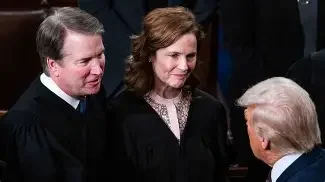
THE COURT KEPT THE DOOR OPEN. ON PURPOSE
Two Trump justices crossed the aisle, the rest of the world already walked away from birthright citizenship, and the only fix left is the hardest one there is.
By Brian Bullock | Everyone Knows | brianbullockwriter.com
*
On June 30, 2026, the Supreme Court told Donald Trump no. By a 6-3 vote in Trump v. Barbara, the Court struck down his executive order ending birthright citizenship and ruled that almost anyone born on American soil is a citizen, no matter who their parents are or how they got here. Roberts wrote it. The opinion ran 194 pages. And two of the justices who killed it were appointed by Republicans, one of them by Trump himself.
They did not just say no. They built a wall around the no, wrote it so it can not be undone without amending the Constitution, and handed Trump a defeat on the one immigration promise he ran on. Here is the why, the who, and what is actually left.
WHO CROSSED, AND WHY IT STINGS
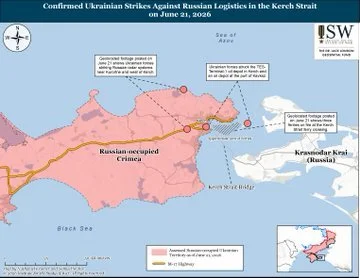
TURNING CRIMEA INTO AN ISLAND
Ukraine is cutting the peninsula off from Russia one bridge, depot, and ferry at a time — and the squeeze is starting to show.
By Brian Bullock | Everyone Knows | brianbullockwriter.com
For most of this war, occupied Crimea has been Russia’s safe rear. It is where the Black Sea Fleet docks, where supplies stage, and where the Kremlin launches operations into southern Ukraine. As of this week, that safety is slipping away, and it is not happening by accident.
Overnight on June 21, Ukraine’s Security Service, its Unmanned Systems Forces, its military intelligence directorate, and its Special Operations Forces struck occupied Crimea and the Russian mainland across the Kerch Strait in a single coordinated wave of long-range drone strikes. The targets were not random. They were the things that keep Crimea fed, fueled, and defended.
The Strikes

The Massacre China Still Can’t Bury
Thirty-seven years after Tiananmen Square, the most powerful surveillance state on earth is still afraid of a date, a photograph, and a number.
By Brian Bullock | Everyone Knows | brianbullockwriter.com
This week, the Chinese government stopped a man from holding a balloon. It turned parents away from their children’s graves. It scrubbed a number off the internet before most of its people could see it. The number was 8964. June 4, 1989.
China calls the Tiananmen Square massacre a faded historical event the country has moved past. Thirty-seven years later, it spends every June proving the opposite.
How It Started
It began with a funeral. Hu Yaobang, a reformer pushed out of the party leadership in 1987, died on April 15, 1989. Students who saw him as a symbol of a more open China gathered in Tiananmen Square to mourn. The mourning became a movement.
By mid-May, hundreds of students had launched a hunger strike in the square. Crowds swelled past a million. The timing could not have been worse for the government. Soviet leader Mikhail Gorbachev arrived for a state visit on May 15, and the world’s press came with him. Instead of a tidy summit, they filmed a million Chinese citizens demanding democracy in the heart of Communist power.

WHILE HE WAS IN BEIJING
The CIA Story That Broke While Everyone Was Watching Trump In China
By Brian Bullock
While the world watched Donald Trump shake hands with Xi Jinping in Beijing, an entirely different fight was unfolding in Washington. A CIA whistleblower stood before the Senate Homeland Security Committee and told them under oath that the CIA had taken back 40 boxes of files. The boxes contained JFK assassination records and MKUltra documents that the Office of the Director of National Intelligence had been processing for declassification under a direct executive order from the President.
The committee was supposed to be talking about classified document oversight. Instead they heard testimony that the CIA was running its own counter-program against the agency that oversees it.
This is the story most Americans missed.
How It Started
On Wednesday, May 13, James Erdman III testified before the Senate Homeland Security Committee. Erdman is not a partisan blogger or a podcast guest. He is a senior CIA operations officer who had recently completed a joint-duty assignment with the ODNI Director Initiatives Group. He worked inside the office of Director of National Intelligence Tulsi Gabbard. He came back to testify about what he saw there.
His core allegation was specific. The CIA, he said, had taken back roughly 40 boxes of files that DNI Gabbard's office was processing for declassification. The files related to the JFK assassination and the MKUltra program. He described it as a documented effort to circumvent oversight.

The Bill Comes Due
Iran spent 21 hours at a table in Islamabad and refused to commit to one thing — no nuclear weapons. Ever. So the blockade begins. And with it, a reckoning arrives for every country that blocked American planes, criticized American operations, and is now screaming about oil prices. The bill comes due for all of them. Including the Iranian people who are paying for a government that does not care if they starve.

They're Not Building Science Stations
16,000 Jobs. $600 Billion. And Nobody Is Asking the Right Question.
What Zuckerberg Is Really Doing — And What It Means for Every Worker in America
By Brian Bullock | Everyone Knows | X @EveryoneKnws1
The headline writes itself. Meta is cutting 16,000 jobs. Mark Zuckerberg is spending $600 billion on artificial intelligence. Everybody nods, everybody moves on, and nobody actually stops to ask what is really happening here. Because what is really happening is not a layoff story. It is not even an AI story. It is a story about the complete restructuring of the American workforce — and most people are going to feel it before they understand it.
Let me tell you what Zuckerberg is actually doing, because it is not what the headlines say.
The Math Nobody Is Running
When people hear 16,000 jobs cut, they picture 16,000 empty chairs and a leaner, cheaper company. That is not what this is. Meta employed nearly 79,000 people at the end of last year. A 20 percent cut gets you to around 63,000. But Zuckerberg is not done hiring — he is just done hiring the same kind of people.
He said it himself, plainly, in January: projects that used to require big teams can now be accomplished by a single very talented person. Read that sentence again. He is not saying he needs fewer people. He is saying he needs fewer of a certain kind of person — and more of a very different kind.
The people walking out the door are content moderators, mid-level project managers, support staff, redundant layers of coordination, and the kind of roles that existed because human beings needed other human beings to manage the complexity of running a massive organization. AI handles that complexity now. Not perfectly. Not completely. But well enough that you do not need ten people where one used to do.
The people walking in the door are AI researchers, machine learning engineers, infrastructure specialists, and the kind of talent that commands $500,000 to several million dollars a year in compensation. Zuckerberg's new superintelligence team is being recruited with packages worth hundreds of millions of dollars over four years. He is not cutting costs so much as he is redirecting them — from volume to precision.
The $600 Billion Question
Now let us talk about that $600 billion figure, because that number is being thrown around as if Zuckerberg is writing one enormous check tomorrow morning. He is not. Nobody spends $600 billion overnight. What that number represents is a commitment to build out data center infrastructure over years — gradually, strategically, as the technology matures and the revenue model becomes clearer.
Think of it the way you think of building a highway system. You do not pour all the concrete on day one. You lay the foundation, build the critical arteries, see what traffic looks like, then expand. Zuckerberg is laying the bones of an AI infrastructure empire, a few billion at a time, while simultaneously reshaping the workforce that will run it.
The labor savings from cutting 16,000 positions — even at a generous $150,000 average fully loaded cost per employee — gets you roughly $2.4 billion a year. That does not come close to funding $600 billion. The real funding comes from what Zuckerberg believes AI will generate in new revenue: AI agents, new advertising tools with dramatically higher conversion rates, enterprise AI products, and entirely new business lines that do not exist yet. The layoffs are not paying for the AI investment. The AI investment is supposed to pay for everything else.
This Is Not New. This Is History Repeating.
Here is what nobody in the tech media wants to say, because it sounds cold: this has happened before. Not with AI. But the pattern is identical.
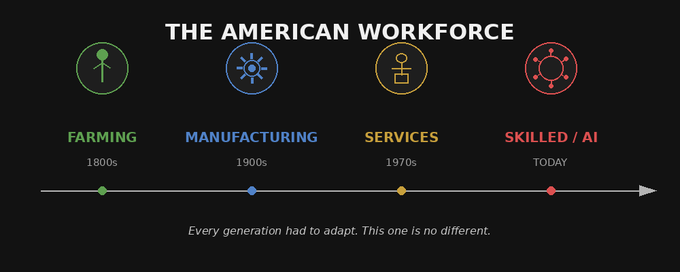
America left farming for manufacturing. When machinery arrived and one tractor could do the work of twenty farmhands, the farmhands did not disappear — they moved to factories. It was painful, it was disruptive, entire communities were uprooted, but the country adapted and the standard of living rose for nearly everyone.
America left manufacturing for services. When automation and overseas production made it cheaper to build things elsewhere, the factory floor shrank and the service economy exploded — retail, healthcare, hospitality, finance. Again, painful, disruptive, whole towns gutted. But the country adapted.
Now America is leaving services for skilled work. The middle layer of the economy — the jobs that require a pulse, a decent work ethic, and moderate training but nothing truly specialized — that layer is getting compressed by AI faster than any previous transition. And the jobs that survive and grow will require something the previous transitions did not always demand: genuine technical expertise.
The 16,000 people leaving Meta are not the last. They are the first wave of a much larger workforce restructuring happening across every major industry simultaneously. Amazon just cut 16,000. Block cut nearly half its staff. The fintech company's CEO pointed directly at AI tools as the reason. This is not a recession. This is a reformation.
What This Means for the Workers
This is where the story stops being about Zuckerberg and starts being about every working American who is not paying attention.
The honest message — and it is one that politicians on both sides are too afraid to say out loud because it does not poll well — is that the unskilled and low-skilled labor market is contracting. Not disappearing entirely. But contracting in ways that are permanent, not cyclical. You cannot wait for the economy to recover and get your job back, because the job itself is being replaced, not just paused.
The people who get through this transition successfully are the ones who understand what is happening early enough to retrain. A 35-year-old content moderator at Meta has time to go back to school, learn a technical skill, and build a second career. A 55-year-old in the same position has a harder road. Both of them need to understand that the old path is closing and the new path requires investment — in themselves, in education, in skills that machines cannot easily replicate.
Trade schools are not the glamorous answer, but they are a real one. Skilled electricians, plumbers, HVAC technicians, and construction workers are not being replaced by AI anytime soon. Neither are nurses, surgeons, or the kind of hands-on technical specialists that require physical presence and human judgment. The jobs that survive the AI transition are the ones that either require the highest levels of technical sophistication or the ones that require a human body in a specific place doing a specific physical thing.
Everything in between is at risk.
What Zuckerberg Is Actually Betting On
Strip away the PR language and the investor calls and here is what Zuckerberg believes: that the company that builds the best AI infrastructure today will own the most valuable real estate in the global economy for the next fifty years. He watched Google own search. He watched Amazon own e-commerce and cloud computing. He watched himself own social media. He is not willing to watch someone else own AI.
Whether he is right is a legitimate question. His Llama 4 models underperformed. His new Avocado model is reportedly lagging expectations. Spending $600 billion on a technology that does not produce the expected returns would be a catastrophic miscalculation. It would not be the first time a tech giant bet everything on the next big thing and came up short.
But the bet itself is rational. The direction is correct even if the specific execution is uncertain. AI is not a fad. It is not the metaverse — a technology in search of a problem. AI is solving real problems, generating real efficiency gains, and producing real value right now. The question is not whether AI transforms the economy. It is who gets to own that transformation.
The Bottom Line
Zuckerberg is not cutting 16,000 jobs to save money. He is cutting 16,000 jobs to make room for a different kind of company — one built around a smaller, more expensive, more skilled workforce operating with AI tools that multiply their output many times over.
The $600 billion is not being spent tomorrow. It is being deployed gradually, as infrastructure, as capability, as the foundation of a new revenue model that does not fully exist yet but that Zuckerberg is willing to bet the company on.
And the 16,000 people walking out the door at Meta — along with the tens of thousands at Amazon, Block, and every other company making the same calculation — are the leading edge of a workforce transformation bigger than anything America has seen since the industrial revolution.
The question for every working American is not what Zuckerberg is doing. The question is what you are doing about it. Because this train is moving whether you are on it or not.
by Brian Bullock / Everyone Knows Podcast | Starborne Studios | brianbullockwriter.com

No. This Is Not World War III. And Shame on You for Saying It Is.
THEY'VE BEEN RUNNING THIS PLAY FOR DECADES
How the Left Built Its Political Machine on Other People's Money — And How They're Still Doing It
By Brian Bullock | Everyone Knows | X @EveryoneKnws1
On June 27, 2018, in the chamber of the United States Supreme Court, a child support worker from Illinois named Mark Janus changed American history. He didn't carry a sign. He didn't march through the streets. He didn't organize a rally or hire a publicist. He did something far more threatening to the left's political machine than any of those things.
He said no.
No to having his paycheck raided every month by a union he never joined. No to funding a political agenda he never agreed with. No to the arrangement that had quietly funneled hundreds of millions of dollars from working Americans into the left's political infrastructure for generations — without their consent, without their vote, and without their knowledge.
The Supreme Court agreed with him five to four. Justice Samuel Alito wrote the opinion. The forced extraction of union dues from non-consenting public employees violated the First Amendment. It was over.
Except it wasn't. Because the left doesn't stop. They never stop. They just find a new tap.
Understanding the Machine
To understand what Mark Janus was really fighting, you have to understand how the left's political machine actually works. It doesn't run on passion. It doesn't run on volunteers. It runs on money — specifically, other people's money, collected without consent and deployed for political purposes under the cover of legitimate institutions.
For decades, public sector unions were the engine. AFSCME. The teachers unions. SEIU. They collected dues — mandatory dues — from every employee covered under their collective bargaining agreements, whether those employees wanted union membership or not. In Illinois alone, Mark Janus had money pulled from his paycheck every single month to fund an organization whose political agenda he fundamentally opposed.
Multiply that by millions of public employees across the country. Multiply that by decades. You're not talking about political donations. You're talking about a mandatory tax on working Americans, laundered through union treasuries, and poured directly into Democrat campaign infrastructure, Democrat voter registration drives, Democrat legal battles, and Democrat political pressure campaigns.
This wasn't a bug in the system. It was the system. The left built its entire political operation on a river of forced money flowing from workers who had no choice but to pay.
Mark Janus cut that river off.
What the Left Did Next
Here's where the story gets important — and where most people stop paying attention. After Janus, the conventional wisdom was that the left had taken a serious financial hit. Union membership in the public sector declined. Dues revenue dropped. Political spending from unions fell.
But the machine didn't die. It adapted. Because the left is extraordinarily good at one thing above all others: finding new sources of other people's money to fund their political operation. And in the years since Janus, they found one hiding in plain sight.
State law offices.
Twenty-three Democrat attorneys general across the country have built what is effectively a replacement machine — fully funded by taxpayers, operating under the cover of law enforcement, and deployed as a coordinated political weapon against a sitting presidency. They organized in early 2024, before Donald Trump had even won the election. They divided into working groups. They combed through Project 2025. They wrote memos. They selected favorable courts. They built the infrastructure of a legal war and had it ready to fire before the first vote was counted.
Then they pulled the trigger on Inauguration Day.
Same Money. Different Pocket.
Let's be precise about what's happening here, because the left is counting on you not to connect the dots.
Union dues were other people's money — taken from workers' paychecks without genuine consent and used to fund a political agenda. The Janus decision said that was unconstitutional. You cannot compel someone to fund political speech they disagree with.
Taxpayer-funded state law offices are other people's money — taken from citizens through taxes and used to fund a coordinated political operation against a presidency those citizens may have voted for. No Supreme Court decision has stopped it. No one has even named it for what it is.
The mechanism is different. The principle is identical. The left found a new pocket to pick.
Minnesota's attorney general Keith Ellison has filed more than fifty lawsuits against the Trump administration. Fifty. Arizona's Kris Mayes has signed onto nearly forty. They meet by video call twice a week. Their staffs talk daily. They added lawyers, redirected resources, and refocused entire state law enforcement offices away from the job their constituents elected them to do — toward a singular mission of neutralizing Donald Trump.
Who pays for those lawyers? You do. Who pays for those video calls, those strategy sessions, those town halls they turned into political rallies? You do. Whether you voted for Trump or against him. Whether you live in a red state or a blue one. Whether you support this operation or find it as outrageous as Mark Janus found his union dues — your money is funding it.
The Tactics Are the Same Too
It isn't just the money. The tactics are identical.
When Governor Bruce Rauner of Illinois tried to stop unions from collecting dues from non-members, the left responded with what the Janus legal team called the Vise — a coordinated campaign of media pressure, street protests, sympathetic coverage, and political intimidation designed to make anyone who challenged them look like a monster who hated workers and children.
When the Democrat attorneys general launched their operation against Trump, they used the same playbook. Town halls designed to collect evidence and rally supporters simultaneously. Press conferences with carefully coordinated messaging. Public statements engineered to generate maximum media coverage. Celebrity endorsements — California's AG Rob Bonta publicly responded to actor Mark Ruffalo's social media call to fight a corporate merger by announcing he was already working on it. The chief law enforcement officer of America's largest state taking marching orders from Hollywood.
The Vise doesn't care about the law. The Vise is about pressure. It's about making the cost of opposition so high — reputationally, financially, politically — that people give up before the fight is over.
Mark Janus didn't give up. That's why he won.
What the Left Knows That the Right Keeps Forgetting
The author of the Janus account made an observation that every conservative needs to tattoo on the inside of their eyelids: the left does not give up. After every defeat, they double down, mobilize, and probe for further weaknesses.
Janus was decided in 2018. Within years, the left had found a new funding mechanism, built a new coordination infrastructure, and deployed it at a scale the union machine never achieved. They didn't mourn their loss. They didn't retreat. They found a new play and ran it harder than the last one.
The right celebrated Janus as a decisive victory. And it was. But a decisive victory means nothing if you don't hold the ground you won and anticipate where the next attack is coming from.
The next attack was always going to come from government itself. The left has spent fifty years building influence inside government institutions — the bureaucracy, the judiciary, the state law offices, the regulatory agencies. When you cut off their external funding, they retreat deeper into the institutions and use the machinery of government as their weapon instead.
That's what you're looking at right now. Twenty-three attorneys general. Fifty-plus lawsuits. Twice-weekly strategy calls. Town halls. Celebrity endorsements. A coordinated political operation running on taxpayer money inside offices that are supposed to enforce the law impartially.
This isn't resistance. This is occupation.
What Needs to Happen
Mark Janus showed us the path. He didn't march. He didn't yell. He found the legal argument, found the courage to make it publicly, and held his ground until the highest court in the land agreed with him.
The Janus principle needs to be applied to what the Democrat AG machine is doing right now. Using taxpayer-funded government offices as a pre-planned political weapon against a presidency — organized before that presidency even began — is not law enforcement. It is compelled political speech funded by people who never consented to it. It is the union dues model wearing a different uniform.
Someone needs to name it. Someone needs to build the legal argument. Someone needs to find the Mark Janus of this fight — a taxpayer in one of these states who can stand up and say: you are using my money to run a political operation I did not authorize and do not support, and that is unconstitutional.
Because here is the truth the left is counting on you to miss: the machine never stops. It just moves. When you cut off one funding source, it finds another. When you win one Supreme Court case, it builds a new operation around the ruling. The only way to defeat it permanently is to stay on offense — to understand how power is accumulated, how it is deployed, and how to dismantle it every single time it rebuilds.
Mark Janus understood that. He was one man, a child support worker from Illinois, and he took on the most powerful public sector union in America and won.
The question now is who steps up next.
Because the machine is running. And it's running on your money.
by Brian Bullock Everyone Knows Podcast | Starborne Studios | brianbullockwriter.com

This Is What Happens When a Culture Loses Its Boundaries
How We Got Here — And Why Pretending It’s Normal Is Dangerous
By Brian Bullock | Everyone Knows | X @EveryoneKnws1
Three assassination attempts against President Donald Trump.
Stop pretending that’s normal.
It does not matter whether you support him or oppose him. Multiple attempts on the life of a political leader are not “heated politics.” They are a red warning light flashing over the health of a country.
And what is just as alarming as the attempts themselves is the response.
There has been no sustained national reckoning. No serious bipartisan effort to confront the rising temperature of our political culture. Instead, there is spin. There is deflection. There is silence where clarity should exist.
Before he is a president, Donald Trump is a father. He is a grandfather. He has children and grandchildren who live under the weight of threats most families will never face. Political opposition does not cancel basic humanity.
Yet for years, much of the rhetoric surrounding him has gone far beyond disagreement.
He is not merely criticized — he is demonized. He is not portrayed as wrong — he is portrayed as evil. He is not described as misguided — he is framed as an existential threat.
Language like that reshapes perception. It turns political opposition into moral emergency. And moral emergency language lowers barriers.
Most citizens will channel anger into voting, debating, or protesting peacefully. But there is always a percentage of individuals who are unstable, impulsive, immature, or easily radicalized. Those are the people who riot. Those are the people who attack. Those are the people who convince themselves that extreme action is justified.
They are fully responsible for their crimes.
But they do not exist in a vacuum.
Culture matters. Tone matters. Repetition matters.
When influential voices describe a political opponent as a monster, a tyrant, or a destroyer of democracy — day after day, year after year — they know those words reach millions. Among those millions are people without the judgment or restraint to process hyperbole as metaphor.
That does not make rhetoric illegal. It does make it consequential.
There is also an incentive structure at work. Outrage drives engagement. Escalation drives ratings. Dehumanization energizes a base. Calm, measured analysis does not.
At the same time, when riots erupt and violent protesters face inconsistent consequences, deterrence weakens. When property destruction and intimidation are minimized as passion, escalation becomes normalized. The message sent — intentionally or not — is that chaos carries limited cost.
This is how the temperature rises.
Escalation does not remain one-sided. Once a culture becomes comfortable treating political opponents as illegitimate or less than human, that tool becomes available to everyone. The precedent spreads. The guardrails erode.
And eventually, someone decides words are not enough.
This is not about shielding a president from criticism. It is about restoring boundaries in public discourse.
You can oppose policies fiercely. You can protest. You can vote. You can campaign.
But when politics becomes moral annihilation — when opponents are framed as existential threats rather than fellow citizens — stability weakens.
Three assassination attempts is not random noise.
It is a symptom.
Before he is president, he is a father.
And if we cannot maintain the basic recognition that political leaders are human beings — regardless of party — then the problem is no longer policy.
It is cultural erosion.
Everyone Knows Podcast | Starborne Studios | brianbullockwriter.com | @EveryoneKnws1
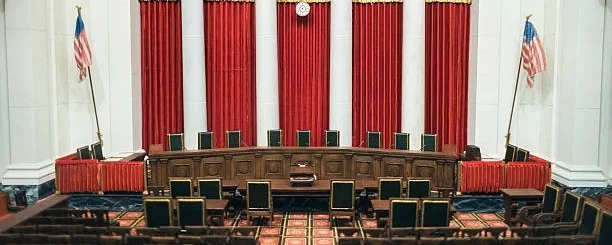
IS THE SUPREME COURT DEFENDING THE CONSTITUTION — OR ITS OWN IMAGE?
An examination of the Supreme Court’s shifting center and its influence on high-stakes constitutional rulings.
By Brian Bullock | Everyone Knows | X @EveryoneKnws1
The Supreme Court exists for one purpose: to interpret and apply the Constitution of the United States. It is not a political body. It is not a public relations institution. It is not designed to manage opinion or preserve its own popularity.
At least, that is the theory.
Today, the Court is often described as divided into three blocs: three justices who reliably lean left, three who reliably lean right, and three in the middle — Chief Justice John Roberts, Justice Neil Gorsuch, and Justice Brett Kavanaugh — who at times shift between the two sides.
On the surface, that structure appears balanced. Some would argue it reflects fairness. The ideological wings counterbalance each other, while the center acts as a stabilizing force.
But when examining certain high-stakes rulings, a deeper concern emerges. The question stops being left versus right. It becomes: Are decisions driven purely by constitutional interpretation — or by concern for how the Court and the country will react?
A defining example of this tension came in NFIB v. Sebelius (2012), the Affordable Care Act case. Chief Justice Roberts rejected the argument that Congress could compel individuals to purchase health insurance under the Commerce Clause. Yet he ultimately upheld the individual mandate by interpreting the penalty as a tax under Congress’s taxing authority. Supporters described this as judicial restraint — an effort to preserve legislation where constitutionally plausible. Critics viewed it as judicial rescue — a reinterpretation that preserved a sweeping federal statute during a politically volatile moment.
The ruling did not simply divide Americans politically. It raised a deeper constitutional question: when a statute can be read two ways, is the Court’s role to preserve it whenever possible, or to enforce constitutional limits even if doing so produces significant political and economic consequences?
More recently, controversies surrounding tariff rulings have sparked similar debate. Critics argue that the economic disruption, legal uncertainty, and wave of litigation that followed were foreseeable. Supporters contend that the Court acted within its constitutional boundaries. But again, the concern for some observers is whether institutional stability — avoiding perceived chaos or backlash — weighs heavily in close decisions.
This debate is not about corruption or dishonesty. It is about priority.
Judicial restraint traditionally calls for interpreting the Constitution faithfully, even when the outcome is unpopular or disruptive. The judiciary was intentionally insulated from electoral politics so that constitutional limits would not bend under public pressure. If preservation of the Court’s image becomes a central factor in decision-making, the risk is subtle but serious: constitutional clarity may give way to institutional caution.
To be fair, there is a counterargument. Some legal scholars argue that preserving the Court’s legitimacy is itself part of its constitutional responsibility. A judiciary that loses public trust risks weakening its authority and destabilizing the rule of law. From this perspective, measured rulings in politically volatile cases may protect the long-term integrity of the institution.
That argument deserves consideration.
But legitimacy grounded primarily in perception rather than principle is fragile. The Court’s authority ultimately rests not on approval ratings, but on fidelity to the Constitution. Stability that comes at the expense of clear constitutional boundaries can erode trust just as surely as overt partisanship.
The issue is not whether a decision favors the left or the right. The issue is whether constitutional interpretation remains the sole guiding standard — even when the political consequences are significant.
The Supreme Court was never intended to be a mirror of public opinion, nor a guardian of its own image. Its duty is singular: fidelity to the Constitution. If that clarity begins to blur, even subtly, the consequences extend far beyond any single case.
History will not judge the Court by how carefully it protected its reputation.
It will judge it by how faithfully it defended the Constitution when it mattered most.
Everyone Knows Podcast | Starborne Studios | brianbullockwriter.com | @EveryoneKnws1
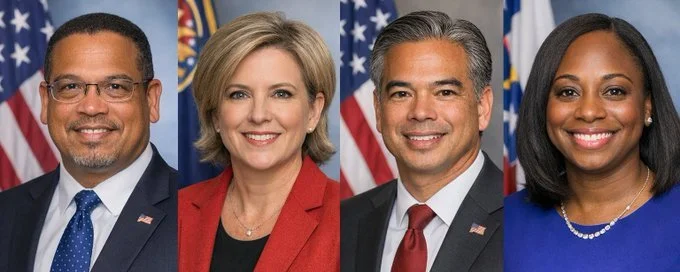
THEY BUILT THE MACHINE BEFORE THE ELECTION WAS OVER
How 23 Democrat Attorneys General Pre-Planned a Legal War Against a President Who Hadn't Even Won Yet
By Brian Bullock | EveryoneKnows | X @EveryoneKnws1
Let's be honest about what this is. This isn't a story about brave public servants protecting the Constitution. This isn't a story about lawyers doing their jobs. This is a story about a coordinated political operation — built in secret, funded by taxpayers, and launched against a presidency before that presidency even started.
Twenty-three Democrat attorneys general didn't wake up on Inauguration Day and decide to fight back. They organized in early 2024. They met in person. They divided into working groups. They combed through Project 2025 and every public statement Donald Trump had ever made. They wrote memos. They war-gamed standing arguments. They picked favorable courts before a single executive order had been signed.
They weren't preparing to defend the law. They were preparing to go to war.
The Setup
By the time Trump raised his right hand and took the oath of office, these 23 attorneys general already had their triggers loaded. The day Trump signed an executive order on birthright citizenship — his first day in office — they sued him. Not after review. Not after deliberation. The next day.
That's not a legal response. That's an ambush.
They've filed more than 50 lawsuits since January 2025. Minnesota's AG Keith Ellison alone has filed more than 50 against the administration. Arizona's Kris Mayes has signed onto nearly 40. They meet via video call as often as twice a week. Their staffs talk daily. They share intelligence, divide labor, and coordinate strategy like a war room — because that's exactly what it is.
And they'll tell you themselves. Massachusetts AG Andrea Campbell said it plainly: "We know the most impactful elected position right now is the Democratic AG." She's not wrong. But she's also telling you the quiet part out loud. This isn't about the law. This is about impact. Political impact.
The Playbook
Here's what makes this operation different from normal legal opposition — and make no mistake, legal opposition to an administration is legitimate. Republican AGs sued Obama. They sued Biden. That's the system working. But what the Democrat AGs did goes further.
They pre-selected which states would lead which cases based on where they believed they had judicial advantages. Read that again. They didn't file where the law was clearest. They filed where the judges were most favorable. That's not legal strategy. That's forum shopping at a scale this country has never seen.
They organized town halls across the country — framed as public engagement — that doubled as evidence collection and political rallies. Standing ovations for attorneys general. In a courtroom, that's called a conflict of interest. In their world, it's called momentum.
They brought in the actor Mark Ruffalo — yes, the Hulk — to social media-pressure them into fighting a corporate merger. And California's AG Rob Bonta responded publicly that he was already "in conversation" with colleagues about it. This is the chief law enforcement officer of the largest state in America taking cues from a Hollywood celebrity on which corporations to target.
That's not the rule of law. That's the rule of politics wearing a law school tie.
The Claim They Keep Making
Their argument — repeated by every one of them in every interview — is that they're winning because Trump keeps breaking the law. Minnesota's Ellison said a first-year law student could see it. They claim an 80% success rate on temporary restraining orders and preliminary injunctions.
Here's what they don't tell you. Temporary restraining orders and preliminary injunctions are the lowest bar in the legal system. They don't mean you won. They mean a judge decided there was enough of an argument to pause something while the case is heard. The Supreme Court already moved to limit nationwide injunctions in mid-2025 — meaning the biggest weapon in their arsenal has been blunted. Their wins are getting smaller, more narrow, and more temporary. The machine is running, but it's losing horsepower.
And while they tout victories for their states, they simultaneously admit that Republican states — whose AGs refused to join the lawsuits — are missing out on the relief. Arizona's Mayes said it herself: "If you don't have a Democratic AG, you are going to get hurt by the Trump administration."
So let's translate that. They've created a two-tier legal system where the relief you receive depends on which party your state attorney general belongs to. They built that. They're proud of it. And they're using it as a campaign pitch.
What This Really Is
Call it what it is: a shadow government with subpoena power.
These are not independent officers of the law acting on principle. They are a coordinated political bloc that pre-planned opposition to a presidency, selected their battles for maximum political damage, and built a public-facing movement complete with town halls and celebrity endorsements. They have added lawyers, redirected state resources, and refocused entire offices away from the work their constituents elected them to do — toward a singular mission of neutralizing Donald Trump.
Republican AGs aren't joining because they're afraid, the Democrats claim. Maybe. But there's another explanation the article never considers: maybe Republican AGs looked at this operation and decided that weaponizing a state law enforcement office against the federal government based on pre-planned political opposition wasn't the job they were elected to do.
There's a difference between standing up for your state and building a machine designed from day one to run out the clock on a presidency. One is public service. The other is a political campaign funded by taxpayers and executed with the power of the state.
The Bottom Line
These 23 Democrat attorneys general don't want to play by the rules. They want to rewrite them in real time — picking their courts, choosing their targets, building their coalitions, and calling it justice.
They prepared for a Trump presidency the way you prepare for an enemy. Not a political opponent. An enemy. And they built everything they needed to fight that war before the first vote was counted.
That should concern every American — not because Trump is beyond scrutiny, but because the moment you pre-plan a legal war against a president based on what you think he might do, you've stopped being a law enforcement officer.
You've become a weapon.
— Brian Bullock | Starborne Studios | Everyone Knows Podcast | brianbullockwriter.com |@EveryoneKnws1

MARK LEVIN IS RIGHT — AND THAT'S EXACTLY WHY WE NEED TO FINISH IT
The Case for This War Has Been Made. Now Let's Talk About Winning It.
By Brian Bullock | Everyone Knows | X @EveryoneKnws1
Mark Levin doesn't need my endorsement. He's been making the constitutional and moral case for American strength longer than most political commentators have been paying attention. But on Sunday night he delivered something that deserves to be read by every American who is confused, conflicted, or being told by the media that this war in Iran was a reckless mistake.
It wasn't. And Levin laid out exactly why — with details that the mainstream press has buried, ignored, or deliberately obscured. I'm not going to rehash his entire monologue. What I want to do is build on it. Because Levin made the case for why we had to act. What I want to add is the case for what acting right actually looks like from here.
What Levin Got Right
The Witkoff details are the ones that should end every argument about whether this war was justified. Steve Witkoff — Trump's own envoy — sat across the table from Iranian negotiators three times. He reported back to the president with a verdict that was unambiguous: they were lying. Not hedging. Not posturing. Lying.
The Iranians told Witkoff directly that uranium enrichment was their sovereign right. They told him their stockpile — approximately 22,000 pounds of enriched material, enough for eleven nuclear bombs — was not on the table. They bragged about it. They said they could reach weapons grade in eleven days. And then they refused to put anything in writing. No draft agreement. No written position. Nothing the president could share with his national security team.
Witkoff told Levin that even Hamas was more reasonable at the negotiating table than the Iranians. Let that sit for a moment. The same organization that massacred Israeli civilians on October 7th was more willing to negotiate in good faith than the Islamic Republic of Iran.
Levin also made a point that every Democrat waving a copy of the Constitution needs to hear. We have had 125 military actions since the founding of this republic. Eleven declarations of war. The last one was in 1942. Not a single president — Republican or Democrat — has gone to Congress and asked permission to take military action. Obama said the War Powers Act was unconstitutional. Biden said it. Clinton said it. Pelosi said it. Hillary Clinton said it. They said it right up until the moment a Republican president used the same authority they defended for decades.
That is not a constitutional argument. That is a political one. And the American people deserve to know the difference.
What Needs to Be Said Next
Here is where I want to add something to what Levin laid out — not to challenge it, but to build on it. Because making the case for why we had to act is one thing. Defining what victory actually looks like is another. And right now that definition is dangerously vague.
Trump is right that this war was necessary. The evidence is overwhelming. Iran was weeks away from a nuclear arsenal. Their proxy network stretched from Lebanon to Yemen to Latin America. They were supplying Russia with the drones killing Ukrainians. They had an active assassination plot against the President of the United States running through a Pakistani national who was just convicted in Brooklyn. The threat was not theoretical. It was operational.
But winning this war means more than killing the leadership and destroying the missile sites. It means finishing with a defined outcome that sticks. And that requires three things being locked in before the shooting stops.
First — the uranium gets secured. All 22,000 pounds of it. Whether U.S. special forces go in and remove it, or nuclear experts dilute it on site, that material cannot be left in a country in chaos. A power vacuum in Tehran with an unsecured nuclear stockpile is not a victory. It is a different kind of catastrophe.
Second — no nation building. This is where every previous Middle East operation fell apart. We go in strong, we achieve the military objective, and we come home. We do not stay to install a government. We do not fund a reconstruction. We do not send peacekeepers. The Iraqi and Afghan lessons were written in American blood and twenty years of wasted treasure. We do not repeat them. Not in Iran. Not for any reason.
Third — the IRGC has to be broken as a functioning military and economic force, not just degraded. The Revolutionary Guard is not just an army. It controls vast portions of the Iranian economy. It runs the proxy network. It is the machine that will rebuild the threat if we leave it intact. Decapitating the leadership means nothing if the institutional infrastructure survives to recruit the next generation of commanders.
The Question Nobody Is Asking
Levin asked what would have happened if Trump hadn't acted. It's the right question and the answer is terrifying. Iran with ballistic missiles capable of reaching the East Coast. Iran with nuclear warheads. Iran with chemical and biological weapons programs running in parallel. A regime that tested a missile seven thousand miles into Siberia with Russian support and called it a proof of concept.
The people saying this war was wrong have no answer to that question. They never do. Their entire foreign policy framework for fifty years has been built on the assumption that the threat could be managed indefinitely — contained, negotiated, sanctioned, appeased. And every single time, Iran used the space those negotiations provided to move further down the path toward a weapon that would make every future negotiation irrelevant.
Trump looked at that fifty-year track record and said enough. Levin is right that history will vindicate that decision. I believe that too.
But history will also judge what comes after the bombs stop falling. Whether the uranium gets secured. Whether we resist the temptation to nation-build. Whether the IRGC is truly broken or just reorganized under new names. Whether the administration has the discipline to define victory clearly and then actually achieve it.
Starting the right war matters. Finishing it the right way matters just as much.
A Final Word
Six American service members are dead. More will likely follow. That is the real cost of fifty years of kicking this can down the road — paid in full by people who put on a uniform so the rest of us don't have to. Levin honored them at the end of his monologue and so will I.
Their sacrifice deserves more than a war that ends ambiguously. It deserves a mission completed — the uranium secured, the proxy network dismantled, the IRGC broken, and American forces home without a thirty-year occupation dragging behind them.
Mark Levin made the case for why this had to happen.
Now let's make sure it actually means something.
— Brian Bullock
Everyone Knows Podcast | Starborne Studios | brianbullockwriter.com

TELL US THE TRUTH ABOUT WHAT THIS WAR COSTS
Gas is up. Jobs are down. Russia just got a pass. The American people deserve a straight answer.
By Brian Bullock | Everyone Knows | X @EveryoneKnws1
The Setup
We are one week into a war against Iran. The administration says it will be over in weeks. They say the price spikes are temporary. They say the job losses are unrelated. They say everything is under control.
Maybe they are right. But right now, the numbers on the ground tell a different story, and the American people are paying for every single one of them.
Gas is up 11% in a single week. Diesel is up 15% — the highest it has been since November 2023. A February jobs report came in at negative 92,000. That is not a rounding error. That is nearly 100,000 people who woke up without a job the same month we started dropping bombs.
And in the middle of all of this, the Trump administration quietly issued a 30-day waiver allowing India to keep buying Russian oil — easing sanctions on the same Russia that has been arming and funding the Iran-Russia-China axis we went to war to push back against.
I support this war. I have said so publicly. But support does not mean silence. And right now, there are questions that need straight answers.
Who Benefits
Russia benefits immediately and directly. A sanctions waiver is a sanctions waiver regardless of how it is framed. While American soldiers are dying in a conflict tied directly to Iranian-Russian cooperation, Moscow just got a 30-day pass to keep selling oil to the global market. That eases pressure on their economy. Full stop.
Oil speculators benefit from the fear and uncertainty — which is exactly why Energy Secretary Chris Wright called the price spikes fear and perception. He is not wrong about the mechanism. Futures markets run on narrative as much as supply. But the American driver paying $3.32 a gallon does not care whether it is fear or physics. The price is real either way.
Democrats benefit politically if this drags out. They already have their midterm message locked and loaded. Senator Chris Murphy is out there right now saying Trump is cutting Medicaid to fund the war. That is a contrast that writes itself on a bumper sticker. The longer the conflict runs, the louder that message gets.
Who Gets Hurt
Working Americans absorb this first and hardest. Diesel at $4.33 a gallon is not an abstraction. It is the cost of moving every truck, every delivery, every piece of food on a grocery store shelf. That price gets passed down the line and it lands on the people who can least afford it.
Republicans in competitive districts get squeezed. Senator John Curtis of Utah — a Republican — went on record this week saying the war risks undermining affordability. That is not a Democrat talking. That is your own team telling you there is a political cost coming if this is not managed carefully.
The war effort itself gets undermined if the economic story overtakes the military story. The administration cannot afford to have the American public focused on gas prices and job losses while soldiers are still in the field. That is a morale problem and a political problem at the same time.
Why Now
The administration is in a narrow window. They launched this war with a clear rationale — Iran nuclear program, the axis with Russia and China, the threat to regional stability. That rationale was sound. The execution in the opening week appears to have been swift and decisive.
But wars have a way of outlasting their opening acts. The administration has now publicly committed to a timeline — weeks, not months. Trump said it in a Reuters interview on Thursday. Wright echoed it on three different Sunday shows. When you put a timeline on a war, you own it. If the war runs past that timeline, everything else — the gas prices, the job losses, the Russian waiver — gets louder.
The Russian oil waiver was issued quietly. It came out last week with minimal fanfare. The official explanation is logical: millions of barrels of oil sitting on ships need to reach Indian refineries to keep the global market from seizing up. That is not an unreasonable short-term move. But it was the right call made in the wrong way — without a direct public explanation of the contradiction it creates.
If you are going to lift sanctions on Russian oil one week into a war against Iran's Russian-backed regime, you owe the American people an explanation that goes beyond common sense. Tell us why. Own the tradeoff. Do not treat it like a footnote.
What Happens Next
If the war ends in the next two to three weeks as promised, the gas prices come down, the jobs number stabilizes, and the Russian waiver expires quietly. The administration gets credit for a decisive, contained operation. The midterm threat evaporates. That is the best-case scenario and it is still a real possibility.
If the war drags past April, none of that happens. Democrats run healthcare versus bombs as their entire midterm message. Gas stays elevated. The Russian waiver becomes a symbol of strategic incoherence. Republicans in the House and Senate start distancing themselves publicly — Curtis already started. And the administration finds itself fighting a two-front war: one in the Middle East and one at home against its own affordability message.
The jobs number is the variable nobody is talking about loudly enough. Ninety-two thousand jobs lost in February. One month. If March comes in negative again, the booming economy framing is gone. A Reuters/Ipsos poll already found most Americans reject that characterization. The administration cannot win on the economy by telling people their experience is wrong.
The Bottom Line
I am not against this war. I am against being lied to about what it costs.
The administration has a credibility window right now. The public gave them the benefit of the doubt in week one. Americans rallied when soldiers died. The support is real. But it is not unconditional and it is not unlimited.
Chris Wright went on three different Sunday shows and said the price spikes are fear and perception. Senator Kennedy blamed guys in Gucci loafers with Frappuccinos. That is color commentary. That is not an economic policy. That is what you say when you do not want to answer the actual question.
The actual question is this: if the war costs more than promised — in time, in money, in economic damage — what is the plan? Not the spin. Not the talking points. The plan.
Six American soldiers are dead. More may follow. The American people will accept a real cost for a real victory. What they will not accept, and what they should not accept, is being told the cost is not real while they are paying it at the pump every single day.
Tell us the truth. We can handle it.
— Brian Bullock
Everyone Knows Podcast | Starborne Studios | brianbullockwriter.com @EveryoneKnws1

They Knew. They Did Nothing. Now Stephanie Minter Is Dead.
How Fairfax County's Democrat-Run Sanctuary Machine — Funded by George Soros — Put a Killer Back on the Street Dozens of Times and Called It Justice
By Brian Bullock | Everyone Knows | brianbullockwriter.com
Stephanie Minter was 41 years old. She was waiting at a bus stop in Fairfax County, Virginia on the evening of February 23, 2025, when Abdul Jalloh allegedly walked up and stabbed her to death.
She is dead. And the people responsible for her death are not just the man holding the knife.
They are sitting in offices in Fairfax County right now. Some of them are still collecting a government paycheck. Some of them were warned — in writing — that this exact thing was going to happen. And they did nothing.
Their names deserve to be known.
The Man They Kept Releasing
Abdul Jalloh entered the United States illegally in 2012. In the years that followed, he racked up more than 30 arrests in Fairfax County — rape, assault, multiple stabbings, drug possession, grand larceny, identity theft, property destruction, firing a weapon, contributing to the delinquency of a minor, and more.
In almost every single case, Fairfax County Commonwealth's Attorney Steve Descano's office dropped the charges.
In 2023, Jalloh was sentenced to seven years in prison for malicious wounding — with five of those years suspended. He was back on the street almost immediately. While on probation for that conviction, he allegedly stabbed another Virginia resident on May 4, 2025. He was granted bond on July 31, 2025. Three weeks later, he allegedly assaulted an older man and stomped his head into the ground.
Six months later, Stephanie Minter was dead.
They Were Warned. In Writing.
This is not a case where the system missed the warning signs. The warning signs were handed to prosecutors on paper, in plain English, months before Minter was killed.
On November 18, 2024, Fairfax County Police Major Jeffrey Mauro sent an email directly to Chief Deputy Commonwealth's Attorney Jenna Sands. The message was not subtle.
"Mr. Jalloh is one of the repeat (and violent) felony offenders I expressed concern about," Major Mauro wrote. "His behavior appears to be escalating and becoming more violent and explosive. It is not a question of if, but rather when he will maliciously wound — or worse — again."
Mauro asked Sands whether the suspended portion of Jalloh's 2023 sentence could be reinstated. Prosecutors did not pursue it.
Police also issued an internal advisory warning officers that Jalloh had been carrying a knife during his last arrest and had been banned from multiple hotels and shelters for violent behavior. "He demonstrates a consistent pattern of retail theft," the advisory noted, "and his repeated violent and explosive behavior has resulted in him being banned from numerous hotels and shelters."
Jenna Sands received that email. Steve Descano ran the office. Stephanie Minter paid the price.
The Soros-Funded Prosecutor: Steve Descano
Steve Descano is not some well-meaning prosecutor who made a mistake. He is a Democrat who ran on a platform of not prosecuting illegal immigrants — and he is still campaigning on it.
His campaign website states explicitly that his office will "take immigration consequences into account when making charging and plea decisions" and that "avoiding the unnecessary destruction of families and communities" by pursuing immigration consequences will be "a top priority."
Translation: if charging you might get you deported, he'll think twice about charging you at all.
Descano's first campaign was bankrolled in part by George Soros. During the 2019 election cycle, the Justice & Public Safety PAC — a Soros-funded political action committee dedicated to electing left-wing prosecutors — poured over $600,000 into Descano's campaign.
He has survived two recall efforts. He is still in office. And Abdul Jalloh's charges kept disappearing.
The Sheriff Who Broke with ICE: Stacey Kincaid
In 2018, Fairfax County Sheriff Stacey Kincaid sent a letter to ICE informing the agency that her office would no longer honor immigration detainers unless accompanied by a court-approved criminal warrant. She terminated the Intergovernmental Service Agreement between her office and federal immigration enforcement outright.
The result: from October 2022 to February 2025, the Fairfax County Adult Detention Center released more than a thousand deportable illegal immigrants in direct defiance of over 1,150 ICE detainer requests. That ranked Fairfax County third in the entire country for ignoring federal immigration holds — behind only Santa Clara County and Chicago's Cook County Jail.
ICE had detainers on Abdul Jalloh. Kincaid's policies made sure they didn't stick.
The System Was Built to Fail You
This is not a story about one bad actor or one bad decision. Every single layer of Fairfax County's criminal justice system was deliberately engineered to protect Abdul Jalloh from the consequences of his actions — and it kept engineering that protection for over a decade.
A Soros-funded prosecutor who campaigned on not deporting criminals. A sheriff who cut ties with ICE and opened the jail door. A restorative justice program that housed a violent repeat offender while he was on probation for stabbing someone. A political machine that survived two recall efforts and kept humming along.
Stephanie Minter didn't have a political machine behind her. She had a bus to catch.
Ask Yourself One Question
If it were Steve Descano's daughter waiting at that bus stop — would Jalloh have been walking free with 30+ arrests on his record?
If it were Sheriff Kincaid's sister — would she have terminated the ICE agreement?
If it were George Soros's family member — would his $600,000 have gone toward a prosecutor who kept letting a violent illegal alien walk?
You already know the answer. So do they.
Stephanie Minter deserved better. So does every American citizen living in a county run by people who have decided that illegal immigrants — even violent, repeat-offending ones — matter more than you do.
Say her name. Remember theirs.
— Brian Bullock / Everyone Knows Podcast | Starborne Studios | brianbullockwriter.com | @EveryoneKnws1

The Iran War: They Thought We Were Bluffing
A Comprehensive View of What Has Taken Place, Who Is Paying, Who Is Waiting, and What Comes Next
By Brian Bullock | Everyone Knows | X@EveryoneKnws1
Let me be straight with you from the start. Nobody wanted this war. Not Trump. Not the American military. Not the families of the thirteen service members already dead. Not the Iranian civilians watching their cities get dismantled block by block. War is ugly, expensive, and final in ways that press conferences and op-eds never are. But here we are. And if you want to understand how we got here, who is responsible, and where this is going, you need to set aside the cable news screaming and look at what actually happened.
Iran thought we were bluffing. That is the simplest explanation for everything that followed.
How We Got Here
For decades, Iran operated with a simple and effective strategy: threaten, posture, negotiate, stall, and repeat. They built a nuclear program piece by piece while the international community held meetings. They funded Hezbollah, Hamas, the Houthis, and every other proxy group willing to do their dirty work while maintaining plausible deniability. They closed the Strait of Hormuz to ships they didn’t like while demanding the world treat them as a legitimate regional power. They assassinated dissidents on foreign soil, executed their own people for burning flags, and sentenced eighteen-year-old girls to death for having the audacity to protest in the street.
And the world let them. Obama gave them the JCPOA and a plane full of cash. The EU held summits. The UN issued resolutions. Iran nodded, signed, and kept enriching uranium at facilities they swore didn’t exist. The strategy worked for years because every American president before Trump either believed the next round of diplomacy would work or simply did not want to own the consequences of the alternative.
Trump made a different calculation. He looked at the evidence — the nuclear timeline, the proxy attacks, the assassination plots on American soil, the stranglehold on the Strait of Hormuz, the direct threats against American military personnel — and decided that the cost of continued inaction was higher than the cost of action. On February 28, 2026, the United States and Israel launched coordinated strikes against Iranian military targets. Operation Epic Fury. 153 cities. Over 500 targets. Supreme Leader Khamenei killed in the opening hours.
Iran thought we were bluffing. They found out we weren’t.
What the Doves Are Saying and Why They’re Wrong
The anti-war crowd has been loud and consistent. War kills people. This is true. War is expensive. Also true. America shouldn’t be the world’s policeman. A fair point in the abstract. Trump didn’t consult Congress. A legal argument worth having. Iran didn’t attack us first. This one is where the argument falls apart entirely.
Let’s deal with that last point directly because it’s the foundation of everything the left is building its case on. Iran didn’t attack us first. Really? Iran funded and directed the groups that killed American soldiers at bases in Iraq and Syria. Iran directed the Houthis to attack American naval vessels in the Red Sea. Iran plotted to assassinate American officials on American soil. Iran’s proxies fired rockets at Israel, an American ally, continuously for years. And Iran spent decades building a nuclear weapons program specifically designed to threaten American interests and American allies in the region.
The argument that Iran didn’t attack us first requires you to ignore every proxy attack, every assassination plot, every missile fired by a group wearing Iran’s fingerprints. It requires you to define “attack” so narrowly that it becomes meaningless. Iran was at war with us long before we were at war with Iran. We just finally decided to show up.
As for the cost in lives — yes, people die in war. That is the nature of war. The question is never whether war has costs. The question is whether the cost of action is higher or lower than the cost of inaction. Every year Iran moves closer to a nuclear weapon is a year the cost of eventual confrontation goes up. Every year Iran strengthens its proxy network is a year more American soldiers and allies die in proxy conflicts. The doves who weep over casualties today have nothing to say about the casualties that would result from a nuclear-armed Iran five years from now.
The Countries Sitting on Their Hands
Here is something the American media is not telling you clearly enough. The European Union — the same bloc that lectures America about multilateralism, the rules-based international order, and the importance of diplomatic solutions — has done almost nothing of substance in this conflict. Germany spent years keeping its defense spending below NATO’s two percent requirement while America subsidized their security. France left NATO’s military command for decades while keeping the benefits. The EU has held press conferences. The EU has issued statements. The EU has called for negotiations.
What the EU has not done is send ships to help secure the Strait of Hormuz. What the EU has not done is contribute meaningfully to the military campaign. What the EU has not done is offer anything of substance beyond words while their economies benefit from the American military doing the heavy lifting that makes global trade possible in the first place.
EU Commission President Ursula von der Leyen called for negotiations and an end to hostilities. That is a statement so empty it could hold an ocean. Call for negotiations with a regime that sentenced an eighteen-year-old girl to death for burning a flag. Call for negotiations with a government that publicly stated it was executing people for “waging war against God.” Call for negotiations with a state that mined the world’s most critical oil shipping route and charged other countries passage fees for the privilege of not being blown up.
Secretary Rubio said it plainly and correctly. He does not work for France or Germany or Japan. He works for the American people. The EU is now advancing a trade deal with the United States while loading it with safeguards because they do not trust Trump to hold up his end. Let that sink in. They have been on the winning end of the American security relationship for decades, and they are nervous about whether America will honor a trade agreement. The question they should be asking is why America continues to honor security commitments to countries that contribute almost nothing in return.
The Gulf states at least have the honesty to recognize what they’re dealing with. Qatar, Kuwait, the UAE, Bahrain, Saudi Arabia, and Jordan issued a joint statement condemning Iranian attacks and proxy strikes against their territory. They know who the enemy is. They know what Iran’s regional ambitions look like up close. They are real allies who are paying real costs. The EU is an interested bystander waiting to see who wins before they decide which side they were always on.
Iran’s Strategy: Loud Mouth, Empty Hand
Iran has been playing a specific game since the strikes began and it is worth understanding. Publicly, they deny everything. They are not negotiating. They did not ask for an extension. They reject the American peace proposal. Their military has destroyed all American bases in the region. Their soldiers have the enemy on the run. This is what they tell their own people.
Privately, they are reviewing every word of Trump’s fifteen-point peace proposal. They removed their foreign minister and parliament speaker from Israeli kill lists after Pakistan intervened. They let Pakistani oil tankers through the Strait of Hormuz as a goodwill gesture. They are passing messages to Washington through intermediaries while loudly insisting no such messages exist. Their foreign minister said they do not want a ceasefire while simultaneously issuing their own five-point counter-proposal for ending the war.
This is not a government acting from a position of strength. This is a government performing strength for a domestic audience while desperately looking for an exit. The Supreme Leader is dead. The IRGC Navy commander responsible for mining the Strait is dead. Over 1,200 Iranians have been killed in the strikes. Eighty-five thousand civilian locations have been damaged including medical centers and schools. Their oil export capacity is at least forty percent shut down. Their proxies are being expelled from countries across the region. And they are still launching missiles at Gulf states because they have nothing left but missiles.
Iran hoped the international community would step in and stop this before it got too far. The EU called for negotiations. The UN Secretary-General said the war was out of control. China watched carefully. Russia watched even more carefully because the oil price spike from the Strait closure was easing their own economic pressure from sanctions. None of them stopped it. Because none of them could.
The Human Cost Nobody Wants to Talk About
Let me say something the left will not say and the right too often glosses over. People are dying. Real people. Over two thousand across the region as of this writing. Thirteen American service members. Over a thousand in Lebanon. An eighteen-year-old Iranian girl named Melika Azizi sentenced to death by her own government for burning a flag at a protest. A nineteen-year-old Iranian wrestler named Saleh Mohammadi publicly hanged for participating in demonstrations against the regime.
That last part matters. While the world debates who started this war and who should stop it, the Iranian government has been executing its own young people for daring to want freedom. The regime that mines international shipping lanes and funds terrorist proxies across the Middle East is the same regime that hangs teenagers in public squares. These are not two separate issues. They are the same issue. You cannot separate Iran’s foreign aggression from its domestic brutality because they come from the same source — a government that has zero accountability to its own people and zero respect for anyone else’s.
This is why Trump’s statement to the Iranian people — that when the bombs stop, their government will be theirs to take back — matters. This war was never with the Iranian people. The Iranian people have been protesting, dying, and being executed for years trying to free themselves from this regime. America is not their enemy. The men running Iran are their enemy. They just happen to also be our enemy.
The Yuan Oil Play and What’s Really at Stake
Here is the story most Americans are not following because it requires understanding economics as well as military strategy. While everyone is focused on the bombs and the body counts, China is using this war to attack the dollar’s reserve currency status. Reports indicate Iran has been allowing oil shipments through the Strait of Hormuz only if transactions are settled in Chinese yuan rather than American dollars. The dollar is already down thirteen percent against the euro in the past year. About twenty percent of global oil trade has already shifted off the dollar.
This is not an accident. China has a national strategy — Made in China 2025, AI 2030 — with funding and timelines. Part of that strategy is weakening American economic dominance by undermining the petrodollar system that has underpinned American financial power since the 1970s. Iran is a willing instrument of that strategy. Every day the Strait stays closed is a day more oil trade flows through yuan-denominated channels. Goldman Sachs projects elevated oil prices through 2027.
Trump understands this. The peace deal he is pushing includes reopening the Strait as a core requirement. He cannot end this war and allow the dollar to bleed out simultaneously. The financial war and the military war are the same war. Russia benefits from the oil price spike. China benefits from the yuan play. Iran is the match that lit both fires. America has to put out the fire without letting either Russia or China walk away with the prize.
Where This Goes From Here
As of this writing, Trump has paused strikes on Iranian energy infrastructure for ten days to allow peace negotiations to proceed. Iran let Pakistani oil tankers through the Strait as a gesture. Pakistan, Egypt, and Turkey are mediating. The 82nd Airborne is deploying to the region. The Pentagon is weighing sending ten thousand more ground troops.
Iran’s counter-proposal demands sovereignty over the Strait of Hormuz, war reparations, and an end to all regional hostilities including in Lebanon. These are not the demands of a country negotiating in good faith. These are the demands of a country stalling for time while reviewing its options. The window for a deal exists but it is closing. Trump gave Iran ten more days. Iran responded by saying they never asked for ten more days.
The 82nd Airborne does not deploy as a courtesy call. Ten thousand additional ground troops are not sent to the Middle East because peace is around the corner. The military buildup tells you what the diplomatic language is designed to obscure — America is preparing for every scenario including the one where Iran decides to keep fighting rather than accept terms that strip them of their nuclear program and their regional proxy network.
Israel’s position is also worth watching. Israel killed the IRGC Navy commander responsible for the Strait blockade. Israel is carving a buffer zone in southern Lebanon up to the Litani River. Israel’s defense minister has authorized strikes on senior Iranian officials without prior approval. Israel is not waiting for a diplomatic solution. Israel is making facts on the ground while diplomacy runs its course. America is trying to hold the door open for a deal. Israel is making sure Iran knows what happens if the deal falls through.
The Verdict
Iran thought we were bluffing. They spent decades testing American resolve and finding it wanting. They watched America retreat from Afghanistan. They watched America draw red lines and walk away from them. They calculated that Trump’s threats were theater and that the international community would step in before anything too serious happened.
They were wrong on every count. The strikes came. The regime’s leadership is dead or hiding. The military is decimated. The economy is bleeding. The proxies are being expelled from countries across the region. And the whole world is watching to see if America finishes what it started.
I am not here to celebrate death. I am not here to pretend this war does not have costs that will be felt for years. I am here to tell you the truth that the doves won’t say and the hawks sometimes skip past in their rush to the finish line. This war did not start on February 28, 2026. It started decades ago when Iran decided that funding terrorism, building nuclear weapons, and threatening its neighbors was an acceptable way to operate in the world. America just finally decided that the cost of letting it continue was higher than the cost of stopping it.
The Iranian people deserve better than the government that has ruled them for forty years. The region deserves better than a state actor that mines international shipping lanes and executes teenagers for protesting. And America deserves leaders who mean what they say.
They thought we were bluffing. Now they know.
by Brian Bullock / Everyone Knows Podcast | Starborne Studios | brianbullockwriter.com | X@EveryoneKnws1